Let’s start with the honest answer most builders won’t give you: there is no accurate number until a licensed builder has walked your land, reviewed your plans, and put a scope in writing.
That said, you deserve a real starting point, not a vague “it depends” that sends you back to Google. At Renaissance Building, our custom homes in Oakland County, Michigan, typically range from $1.2 million to $3.5 million and beyond. That range exists for a reason. A 3,200-square-foot craftsman on a cleared, utility-ready lot in Rochester Hills is a very different project than a 5,500-square-foot modern farmhouse on a wooded hillside in Milford Township with a walk-out basement and a three-car garage. Both are custom homes. Both involve entirely different sets of costs.
Here’s what actually drives the number and what every serious buyer needs to understand before picking up the phone.
What Puts You at the $1.2M to $1.8M Range
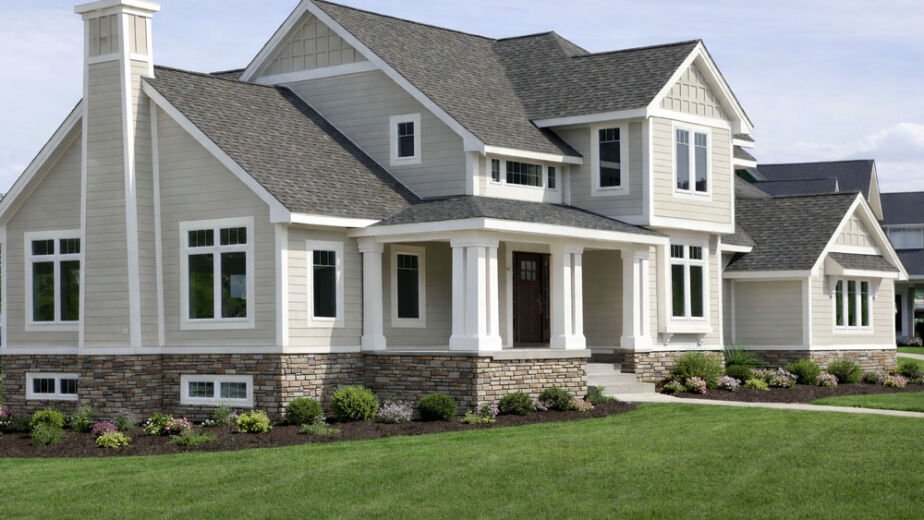
At this tier, you’re building high-quality custom home plans, quality finishes, and avoiding spec-builder shortcuts, while making intentional decisions about size and material selection. Think 3,000 to 3,800 square feet. You’re choosing solid hardwood floors over wide-plank European oak. You’re selecting quality windows without going to a full triple-pane European system. The kitchen is genuinely custom, but you’re not installing a $60,000 refrigerator wall.
Lots at this tier are typically more accessible, closer to utilities, with minimal grading required and standard soil conditions. You’re not fighting the land. You’re building on it.
What Pushes You Into the $1.8M to $2.8M Range
Square footage climbs. Ceiling heights increase. The complexity of the design increases with multiple roof lines, larger window packages, and a finished lower level with custom millwork. Primary suites get more elaborate. Home theater spaces, wine cellars, and covered outdoor living areas are considered.
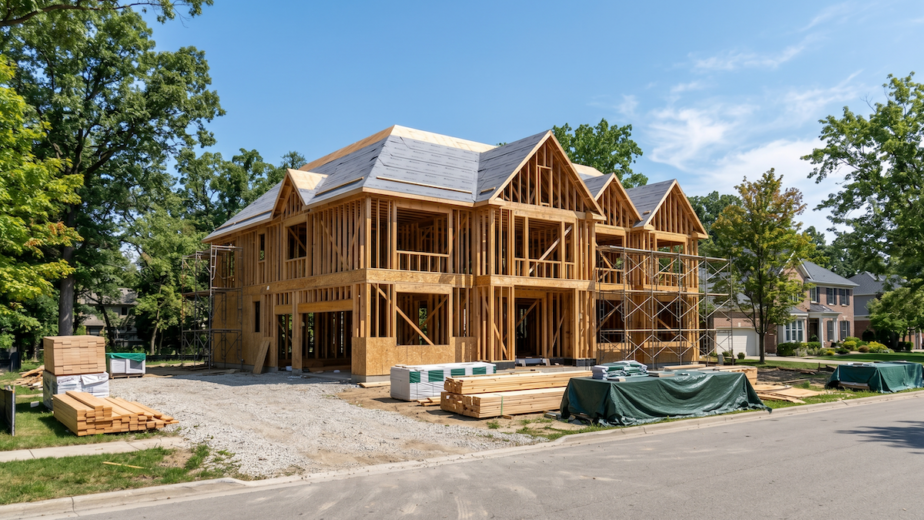
Land conditions start to matter more here. A lot with a significant slope may require a full engineered retaining system. A walk-out basement, while desirable, adds excavation, waterproofing, and finishing costs that aren’t visible until a builder actually stands on the site. Many areas without natural gas access add to costs. A lot that needs a new well and septic system adds $40,000 to $80,000 before a single framing nail is driven.
What Takes a Project to $3.5M and Beyond
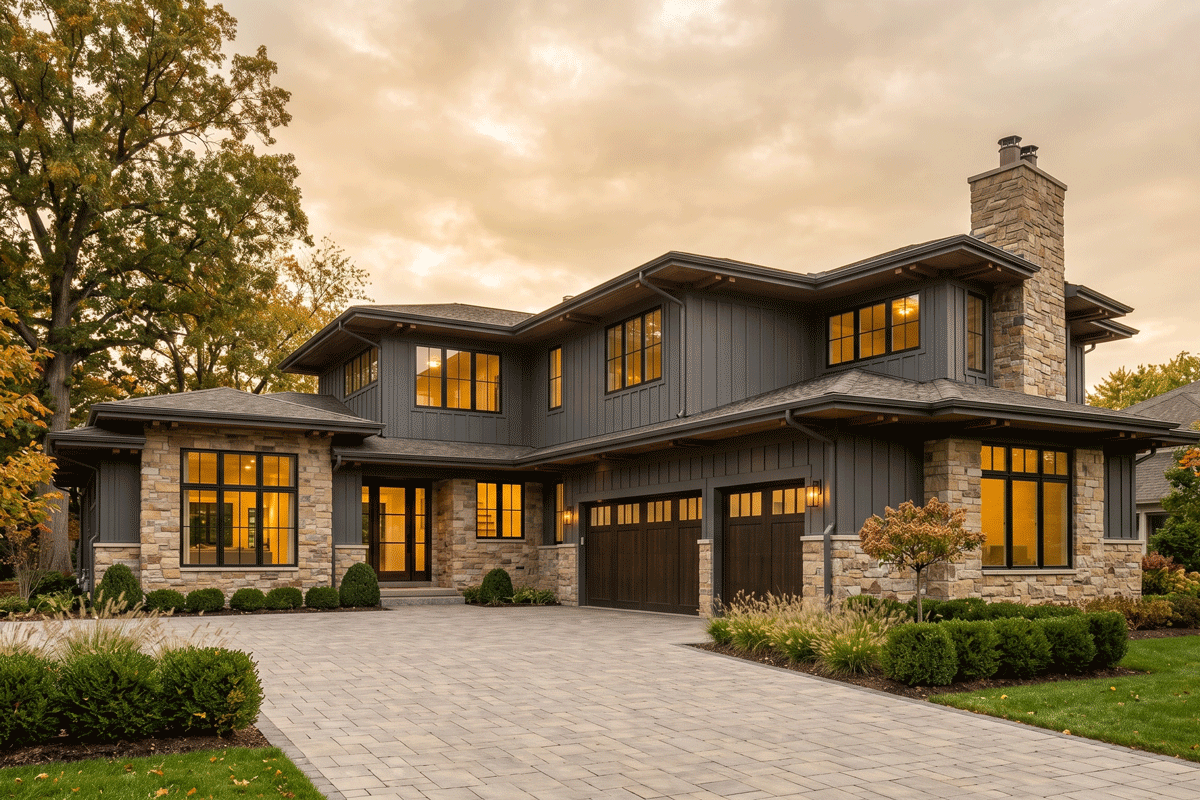
At the top end, you’re building an estate. We’re talking 5,000-plus square feet of finished space, a full suite of premium systems, geothermal HVAC, full-home automation, heated drives and floors, commercial-grade appliances, and finish selections not found on any showroom floor. Custom steel staircase fabrications. Hand-plastered walls. Imported stone. Outdoor kitchens with structural covers and dedicated gas and electrical systems.
Lot complexity is often significant at this tier: larger parcels, more complex grading, longer utility runs, and private road requirements. The land itself can add $150,000 to $300,000 in site development before construction starts.
Why Your Lot Conditions Change Everything
This is the piece most buyers underestimate, and the piece that causes the most budget shock when a builder finally sees the land.
In Oakland County specifically, soil conditions vary considerably. Some areas have sandy loam that drains beautifully and makes foundation work straightforward. Others sit on clay-heavy ground that requires engineered footings, drainage systems, and moisture management strategies that add real dollars. Wetland setbacks, drain commission easements, and utility corridors can dramatically reduce the buildable footprint of a parcel that looks perfect on paper.
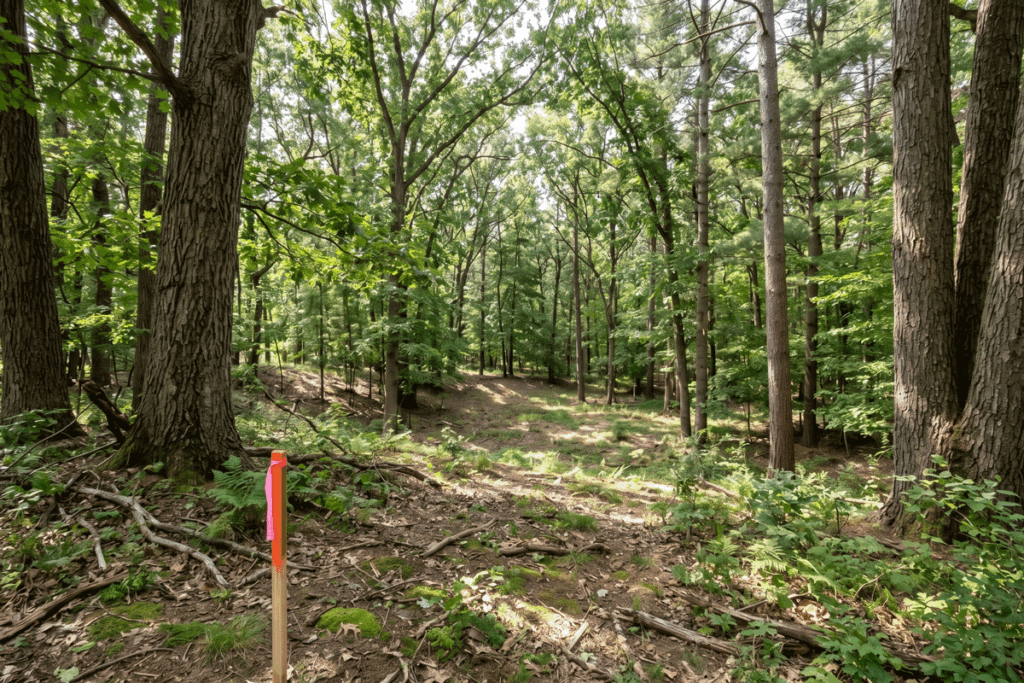
Slope is a cost multiplier. A lot with a 10-foot grade change from front to back might be a perfect candidate for a walk-out lower level, which is a feature, not a problem. But that same slope requires more excavation, more concrete, and more waterproofing than a flat site, and those costs need to be in the budget from the beginning.
Utility access is one of the most overlooked line items when buyers are evaluating lots. If your parcel doesn’t have municipal water and sewer, common in the more rural parts of Oakland County, like Independence Township or Springfield Township, you’re looking at a well and septic system. If it doesn’t have natural gas on the road, you’re deciding between propane, which has ongoing cost implications, or an all-electric system with a heat pump. Neither is a bad choice, but both need to be budgeted intentionally.
What a Pre-Construction Agreement Actually Locks In
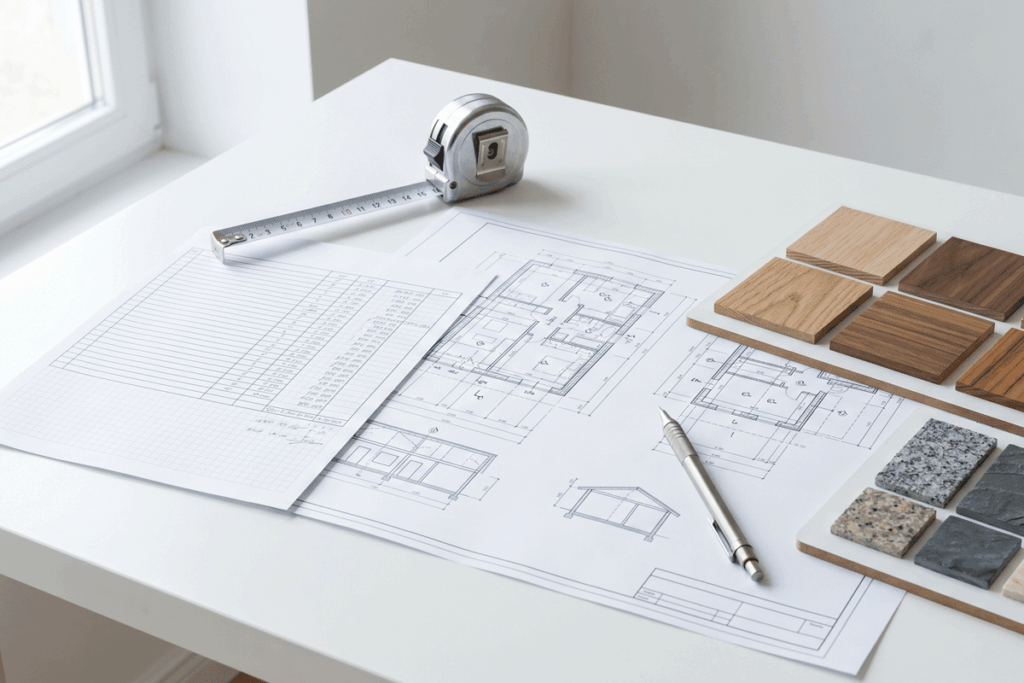
One of the most important things Renaissance Building does before construction starts is to execute a detailed pre-construction agreement. This isn’t a handshake and a ballpark. It’s a comprehensive scope of work with accurate material specifications, a realistic timeline, and a cost breakdown that reflects your actual land conditions and your actual design.
This step protects you. It protects you from budget creep caused by vague scopes that leave room for a builder to make up costs as they go. It protects you from discovering, mid-framing, that the “included” flooring is really a base-grade product and that your preferred selection is a $35-per-square-foot upgrade. It protects you from a timeline that was never realistic to begin with.
Every serious builder should be willing to put the scope and pricing in writing before writing a check. If they aren’t, that tells you something important.
Why Phone Quotes Are Worthless
A builder who quotes you a price without seeing your land, reviewing your plans, or understanding your site conditions isn’t giving you a quote. They’re giving you a number designed to keep you interested. That number will change, and it will always change upward, and always after you’re too invested to walk away.
At Renaissance Building, we don’t quote custom homes over the phone. We can’t, and any builder who tells you they can is either guessing or telling you what you want to hear. What we can do is sit down with you, understand your vision, evaluate your land, and give you an accurate, honest picture of what your project requires.
That conversation starts with a consultation, no pressure, no obligation, just clarity.
Ready to Get a Real Number?
If you’re serious about building a custom home in Oakland County, Michigan, the best thing you can do right now is schedule a consultation with a builder who has actually walked land like yours and built homes at your price point. Call Renaissance Building at 734-359-6220 or schedule online. We’ll give you a straight answer because that’s what you deserve.
FAQs
Q: What is the average cost per square foot to build a custom home in Oakland County, Michigan?
A: Per-square-foot pricing is a useful shorthand but a dangerous planning tool. High-quality custom construction in Oakland County typically runs $300 to $500+ per square foot for the home itself, not including lot, site development, utility connections, or landscaping. Homes with complex designs, premium finishes, or challenging site conditions will exceed that range. The only reliable number is one built from your actual scope and land.
Q: Does the cost include the lot?
A: No. Construction costs and lot costs are separate. In Oakland County, lot prices vary widely from $150,000 for a modestly sized infill lot to $600,000 or more for a premium wooded parcel in a desirable township. Site development costs, grading, utility connections, well and septic, if needed, are also separate from the construction budget and should be evaluated before you purchase land.
Q: How long does it take to build a custom home in Michigan?
A: From breaking ground to move-in, most custom homes in the $1.2M to $3.5M range take 14 to 22 months, depending on size, complexity, and material lead times. The pre-construction and permitting phase adds additional time before construction starts. A builder who quotes you 10 to 12 months for a complex custom build is either cutting corners or underestimating the schedule.
Q: What is a pre-construction agreement, and why does it matter?
A: A pre-construction agreement is a detailed written document that defines the scope, specifications, pricing, and timeline for your build before construction begins. It protects you from budget surprises and holds the builder accountable to a defined scope. At Renaissance Building, this step is non-negotiable. We believe every homeowner deserves an accurate number before they commit, not after they’re already invested.