At some point in the custom home process, you stop asking whether to build and start asking what to put in it. That’s a good place to be. It means the project is real and the decisions are real.
It also means you’re about to be presented with a menu of options that ranges from genuinely smart investments to things that sound exciting in a showroom and underperform in real life. After 50 years of combined experience building custom homes in Michigan, we’ve watched buyers spend money wisely and foolishly. Here’s our honest take on both.
Upgrades Worth Every Dollar
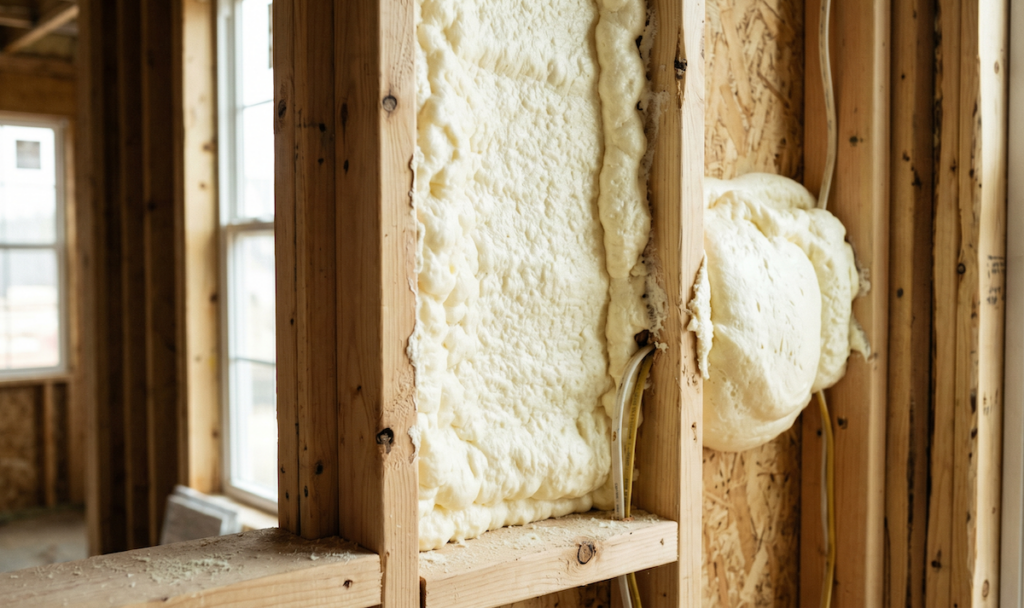
Insulation Quality and Building Envelope
This is the upgrade that never photographs well and pays you back every single month. Most builders will install code-minimum insulation because it passes inspection and keeps the base price competitive. That’s their priority. It shouldn’t be yours.
A properly specified building envelope, spray foam in critical areas, continuous exterior insulation to eliminate thermal bridging, and high-quality windows with proper installation and air sealing dramatically reduce your heating and cooling costs. In Michigan, where January temperatures regularly drop 10 degrees below, and summer humidity is real, a tight building envelope means your HVAC system runs less, and your comfort is more consistent. Your utility bills are a fraction of what they’d be in a code-minimum build.
The cost difference between code-minimum insulation and a genuinely high-performance envelope is typically $20,000 to $40,000 on a home in our range. The return, measured in energy savings, comfort, and reduced HVAC system wear, makes this one of the clearest financial wins in a custom build.
Window Placement and Natural Light Strategy
Windows are not just a material selection. They’re design decisions that determine how your home feels to live in, how much natural light you get, and how your heating and cooling loads behave throughout the year.
South-facing glass in Michigan captures useful passive solar heat gain in winter. West-facing glass without a proper overhang creates afternoon heat gain and summer glare, which is not useful. A carefully considered window placement strategy that accounts for solar orientation, view lines, and privacy can make a home feel twice as open and connected to its site as one where windows were placed arbitrarily to match the elevation drawing.
Work with your builder and designer on this early. It costs nothing to get it right in the planning phase and thousands to change it later.
Electrical Rough-In for Future Needs
Running conduit and rough-in wiring for things you may not install yet costs a fraction of what it costs to add them later—planning to add EV charging in the garage eventually? Rough it in now. Want to be ready for a future home generator? Get the transfer switch and conduit run during construction. Planning to finish the lower level in five years? Run the electrical rough-in now.
Opening finished walls to add circuits is expensive, disruptive, and avoidable. A good builder will walk you through anticipated future needs and help you make a one-time investment that eliminates future headaches.
Primary Suite Layout
The primary suite is the room you spend the most private time in, and it’s the room that most directly affects your daily quality of life. It’s worth spending intentional time on the layout, not just the finishes.
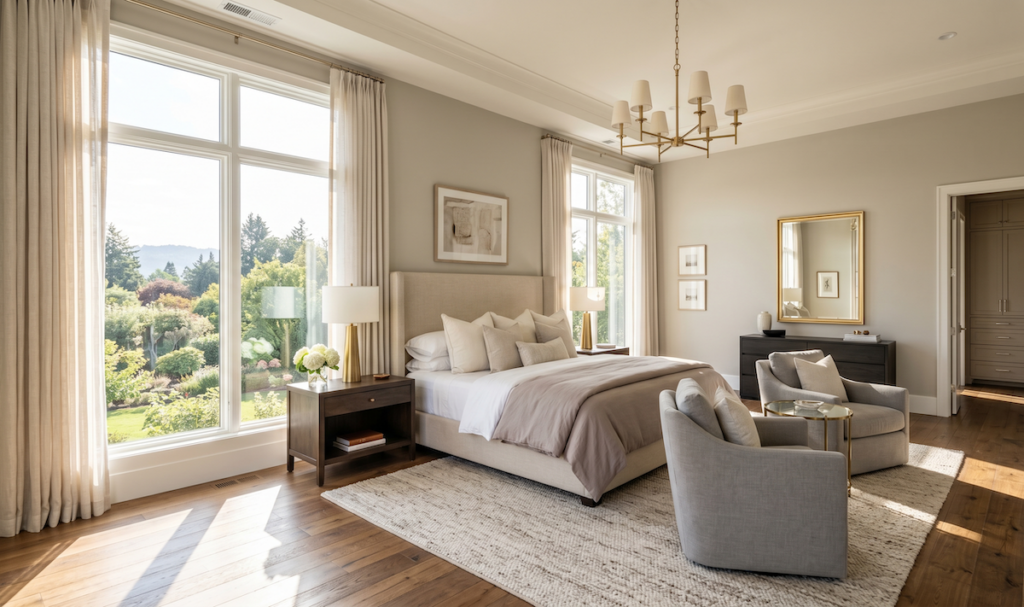
The things that matter: separation from other bedrooms for acoustic privacy, natural light in both the bedroom and the bathroom, a bathroom layout that actually functions for two people simultaneously, and adequate closet space that’s organized around how you actually live. These are design decisions, not material selections. They cost nothing extra if they’re made at the right stage. They cost a great deal to fix after framing.
Three Upgrades That Sound Better Than They Are
Trendy Fixtures That Date Fast
The fixture finish that everyone wants right now, and we’ve watched this cycle enough times to say this with confidence, will look dated in seven years. Matte black had its moment. Brushed unlacquered brass is having one now. Champagne bronze is right behind it.
That doesn’t mean you can’t choose a finish you love. It means you should choose it because you love it, not because it’s currently trending on design blogs. If you’re selecting fixtures with one eye on resale value, choose something timeless over something current. Polished nickel. Satin brass. Matte white. These hold up.
The other trap with fixtures is buying expensive decorative pieces for spaces where performance matters more than aesthetics. A $3,500 designer faucet in a mudroom used by children daily is a choice that will frustrate you within a year. Match the investment level to how the space is actually used.
Over-Customized Rooms That Hurt Resale
A dedicated home theater room with full acoustic treatment, tiered seating, and a 150-inch screen is a genuine feature for a buyer who wants exactly that. For the next buyer, who may want a flexible bonus room or a home office, it’s a renovation project.
Highly specific rooms dedicated to cigar lounges, hyper-specialized hobby spaces, and wine cellars in unusual locations can be wonderful for you and problematic for resale. The solution isn’t to avoid personalization. It’s to build personalized spaces that have a clear second life if your circumstances or the buyer pool changes. A room with great bones, flexible wiring, and good proportions can become many things. A room built around one specific purpose has a narrower audience.
Luxury Materials in Low-Traffic Areas
Imported marble in a powder room that sees two guests a day is a reasonable splurge. The same marble on a mudroom floor that faces Michigan winters, salt-covered boots, and the daily traffic of a family of four is a maintenance commitment most people don’t enjoy.
Match the material selection to the use pattern. Durable, beautiful materials in high-traffic spaces. Reserved luxury for areas where it will be appreciated and protected. A honed limestone in a formal living room is an elegant choice. A honed limestone kitchen floor used for daily family meals with young children is going to require significantly more attention than most people want to give a floor.
The Right Question to Ask About Every Upgrade
Will I be glad I spent this money five years from now, or will I have forgotten it entirely? That’s the filter. The upgrades that pass that test are the ones worth doing. The ones that sound exciting in a design meeting but don’t change how you live in the home day to day are the ones to approach carefully.
At Renaissance Building, we help our clients think through these decisions before they become costly commitments. That’s what 50 years of combined experience actually looks like in practice, not just building beautiful homes, but helping you allocate your budget where it genuinely improves your life.
Ready to talk through your selections with a builder who will tell you the truth? Call Renaissance Building at 248-859-5943 or schedule a consultation online.
FAQs
Q: How do I know which upgrades will improve my home’s resale value?
A: Upgrades that improve the home’s core livability, insulation, windows, primary suite layout, and functional kitchen design tend to hold value well because they appeal to any buyer. Highly personalized or trend-driven selections have a narrower audience. If resale is a concern, invest in quality where it’s invisible (the building envelope, electrical, plumbing) and choose finishes that are timeless rather than current.
Q: Is it worth upgrading insulation beyond code minimum?
A: In Michigan, yes, strongly. Code-minimum insulation gets a home past inspection, but a high-performance building envelope reduces energy costs, improves comfort, and extends the life of your HVAC equipment. For a $1.5M to $3M home, the incremental cost of upgrading the building envelope typically has a payback period of 8 to 12 years in energy savings alone, and the comfort improvement is immediate.
Q: When should I make decisions about electrical rough-in for future needs?
A: During design and pre-construction, before framing begins. Once walls are framed and mechanical systems are roughed in, changes get expensive quickly. Have a specific conversation with your builder about EV charging, future generator capacity, home automation readiness, and potential for lower-level finishes before the scope is finalized.
Q: Are smart home systems worth installing during construction?
A: A structured approach to home technology pre-wiring for automation, installing a good whole-home network infrastructure, and planning for whole-home audio is worth doing during construction because the labor cost of doing it then is a fraction of what it costs to retrofit. The specific technology systems, however, evolve rapidly. Design the infrastructure to be flexible. Don’t over-invest in specific hardware that may be obsolete in five years.