Most people who call us about a barndominium have already settled on the design. The part that slows them down is the money. Barndominium financing in Michigan follows the same basic path as financing any new home, but the lender and the appraiser each look at a post-frame house a little differently, and so does the insurance carrier.
None of those differences are deal breakers, but they reward buyers who show up prepared. This post explains why the building type matters to the people writing the checks and how construction loans are structured. We also cover the paperwork that keeps a draw schedule moving, plus why insurance belongs on your list before the first footing is poured.
Why Barndominium Financing in Michigan Works Differently
A lender is really lending against what the finished house will be worth if they ever have to sell it. With a conventional stick-built home, that number is easy to support. With a barndominium, it takes more homework.
Comparable Sales Are Thinner
Appraisers estimate value by looking at recent sales of similar homes nearby. In much of southeast Michigan there are plenty of two-story colonials to compare against, but far fewer finished barndominiums. When close matches are scarce, the appraiser may reach further out or adjust heavily from conventional homes, which can produce a conservative valuation.
You can help by giving the appraiser a clear picture of what is being built. Finish levels, insulation, window packages and mechanical systems should be spelled out. A post-frame home with high-grade interior finishes should be compared to homes with similar finishes, not to a pole barn.
How the Building Is Classified
Some lenders still picture an uninsulated metal shed when they hear the word “barndominium.” What matters to them is whether the structure is a permanent single-family residence on a proper foundation. They also want to see that it is built to the residential code and permitted as a dwelling. If you are new to the building type, our Michigan buyer’s guide to what a barndominium really is explains the construction in plain terms.
Describing the project on the application as a single-family home with post-frame construction is accurate, and it tells the underwriter exactly what they are financing.
Residential Versus Agricultural Framing
Many barndominiums go on rural or semi-rural parcels, and some of those parcels carry agricultural zoning or farm activity. Lenders and insurers can get nervous if a file looks like a farm building with a bedroom added. Keep the living space clearly residential on paper, and show any shop or equipment bay as an accessory area of the home. If you plan to keep livestock or run a business there, tell your lender up front.
How Construction Loans for a Barndominium Work
A traditional mortgage pays for a house that already exists. A construction loan pays out in stages while the house is being built, then converts to or is replaced by long-term financing. Lenders generally offer two structures.
One-Time Close Construction-to-Permanent Loans
With a one-time close loan, you go through underwriting and closing once. The loan funds construction in draws, and when the house is finished it converts to a permanent mortgage without a second closing. Buyers like having one set of closing paperwork.
The tradeoff is that not every lender offers it for post-frame homes, and those that do may have tighter requirements on the builder and the plans. Ask early whether the lender has closed one on a barndominium before.
Two-Step Construction Loans
A two-step approach uses a short-term construction loan that covers the build period. When the home is complete, you take out a separate mortgage to pay it off. That means two approvals and two closings. It can also give you more flexibility to shop for permanent financing once the finished house can be appraised as a completed home, which sometimes helps with a building type that has few comparable sales.
Government-Backed Programs to Ask About
Some buyers may qualify for government-backed options. The USDA’s Single Family Housing Guaranteed Loan Program covers building a home in eligible rural areas and includes a single-close construction-to-permanent option through approved lenders, with income and location limits. Eligible veterans and service members can use a VA-backed purchase loan to build a new home, and some lenders offer FHA-insured construction-to-permanent products as well.
Program rules change, and lenders add their own requirements. Confirm eligibility and builder approval directly with a lender who participates in the program before you plan around it.
What Helps a Lender Say Yes
Underwriters approve files they understand, and a complete first submission means fewer rounds of questions.
Plans and a Detailed Budget
A full set of construction drawings is the starting point. Pair it with a written specification sheet that describes the foundation, framing system, insulation, roofing, windows, mechanicals and interior finishes. The appraiser uses these documents to build an “as completed” value, so vague specs tend to produce cautious numbers. A detailed line-item budget from your builder shows the lender where every dollar goes. If you want to understand what moves that budget, our post on what it costs to build a barndominium in Michigan walks through the main cost drivers.
The Builder Contract and Licensing
Lenders want to know who is building the house and whether that builder can finish it. Expect them to ask for a signed construction contract, proof of a Michigan residential builder’s license, insurance certificates and sometimes references or a list of completed homes. Many lenders are reluctant to finance owner-builder projects.
Renaissance Building holds dual Michigan Residential Builder’s Licenses, and our team brings 50 years of combined experience. We are used to supplying lender packages for our Michigan barndominium projects.
Draw Schedules and Construction Milestones
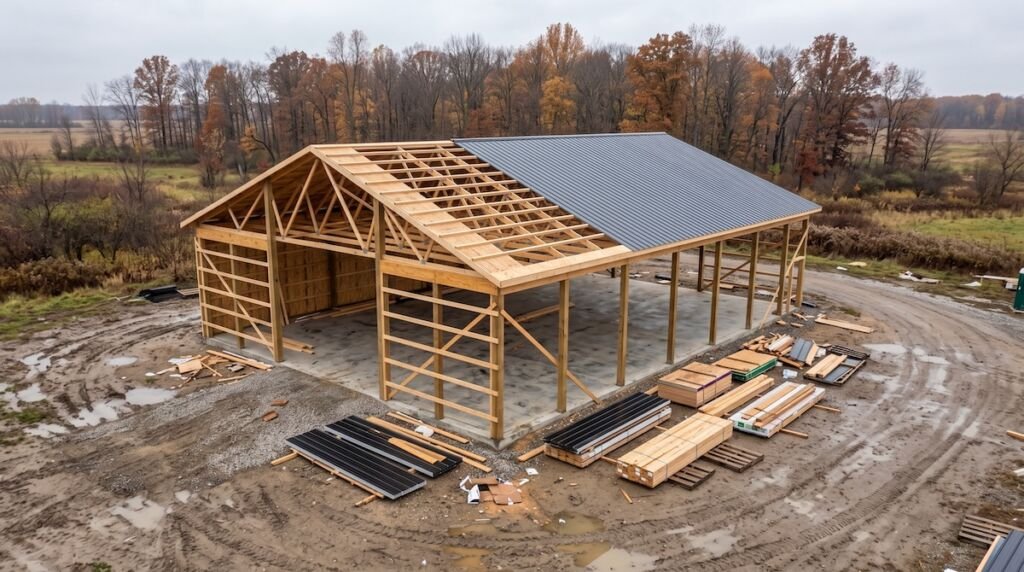
A construction loan does not hand over the full amount at closing. Money is released in draws, and each draw is tied to a stage of completed work. A typical schedule might release funds after site work and foundation, then after the post-frame shell is up and dried in. Later draws follow rough mechanicals and then insulation with drywall, and the final draw comes at completion, once the certificate of occupancy is issued.
Before each draw, the lender usually sends an inspector to confirm the work is done, so the schedule in your builder contract should line up with the lender’s draw schedule. When the two match, subcontractors get paid on time and the job keeps moving.
Foundation and site work can stall in a Michigan winter, so plan your start date with the draw calendar in mind. We send clients weekly updates with shared photo folders and schedule updates, along with open reporting of any problems, and that same record gives lenders and inspectors a clear view of progress.
Lining Up Insurance Early
Insurance is often the last thing buyers think about and one of the first things a lender asks for.
Builder’s Risk Coverage During Construction
Builder’s risk insurance protects the structure and materials while the home is going up. Fire and wind damage are common concerns, and so is theft of materials from an open job site, which is a real risk on rural parcels. Your lender will likely require it, and your contract should state clearly whether you or the builder carries the policy.
Homeowners Coverage for the Finished Home
Once the house is complete, the builder’s risk ends and a homeowners policy has to take over. Some carriers hesitate on barndominiums because they confuse them with agricultural buildings. Shop for this coverage during construction and give the agent the same plans and specs you gave your lender. Disclose the shop area and any equipment so a claim is not denied later.
Frequently Asked Questions
Is it harder to get barndominium financing in Michigan than for a regular house?
It is usually more involved rather than harder. Fewer lenders have experience with post-frame homes, and appraisers may have fewer comparable sales to work from. A complete plan set with detailed specs answers most underwriter questions up front, especially when a licensed builder stands behind it.
Will an appraiser value my barndominium lower than a stick-built home?
Not necessarily. Value depends on size, finish level, location and the comparable sales available. Detailed specifications help the appraiser compare your home to houses with similar finishes.
Can I use a USDA or VA loan to build a barndominium?
Both programs allow new construction in certain cases, but eligibility depends on both the borrower and the property, and each lender adds its own rules. Property location and income limits apply to USDA loans. Confirm the details with a participating lender before you commit to a plan.
Do I need builder’s risk insurance if my builder already has insurance?
Your builder’s general liability policy is not the same as builder’s risk coverage on the structure itself. Your contract should say who carries the builder’s risk policy, so clarify it before closing.
How many draws does a barndominium construction loan usually have?
It varies by lender. Most draw schedules follow major milestones such as foundation, framing and dry-in, rough mechanicals and completion. Your lender sets the schedule, and your builder should align the contract with it.
Start Your Barndominium Financing on Solid Ground
Barndominium financing in Michigan goes much more smoothly when the plans, specs, budget and builder credentials are ready before you walk into the lender’s office. We help clients assemble that package and work directly with lenders and their inspectors through every draw. If you are planning a barndominium in Metro Detroit or the surrounding counties, schedule a no-obligation consultation and we will talk through your plans and what your lender will want to see.