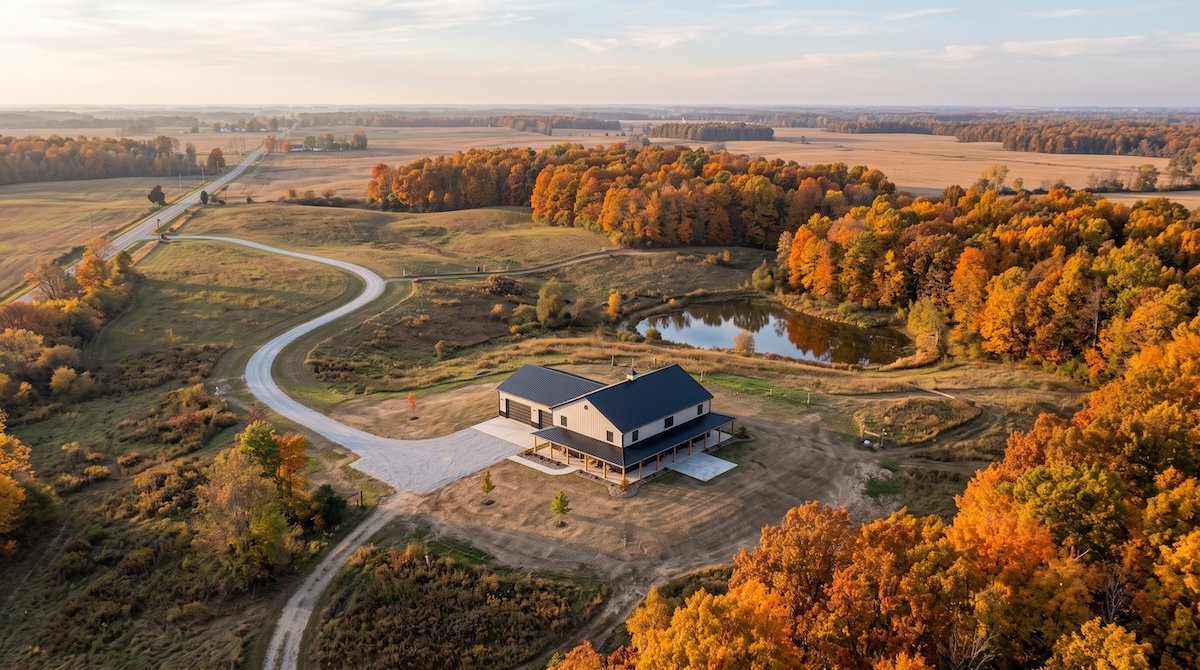
Most people who call us about a barndominium in Livingston County, Michigan, already have a picture in their heads: a steel-sided building set well back from the road with a shop bay big enough for the tractor. Open land surrounds it. That picture is achievable here. The county still has plenty of rural parcels in townships like Oceola and Tyrone, or Putnam and Unadilla to the south.
What the picture leaves out is everything that happens between the road and the front door. Raw acreage has no water line or sewer tap. Usually there is no driveway either. Before a single post goes in the ground, you will deal with land division rules and soil evaluations, then well placement and utility runs. The township zoning ordinance shapes the plan as well. This post walks through those realities in the order they tend to come up.
Splitting a Parcel Under the Michigan Land Division Act
Many acreage purchases here involve a piece carved off a family farm or larger tract. That split is governed by the Michigan Land Division Act, and it is the first thing to sort out.
How the split limits work
The Act limits how many parcels can be created from a “parent parcel,” and the number depends on the parent’s size. The formula is spelled out in Section 108 of the Land Division Act, which also counts earlier divisions of the same parent against the total. If a previous owner already split the farm several times, there may be few divisions left, or none. Resulting parcels of 40 acres or more with road access are exempt from the count.
Township review comes before the sale
Townships review and approve divisions under their own ordinances, layered on top of the state law. Hartland Township’s ordinance, for example, generally holds new parcels to a 3:1 depth-to-width ratio and requires a tentative parcel map showing access and easements. A parcel created in violation of the ordinance can be refused building permits entirely. Make the purchase contingent on an approved split, and ask the assessor how many divisions remain on the parent parcel.
Well and Septic Permits Through the Livingston County Health Department
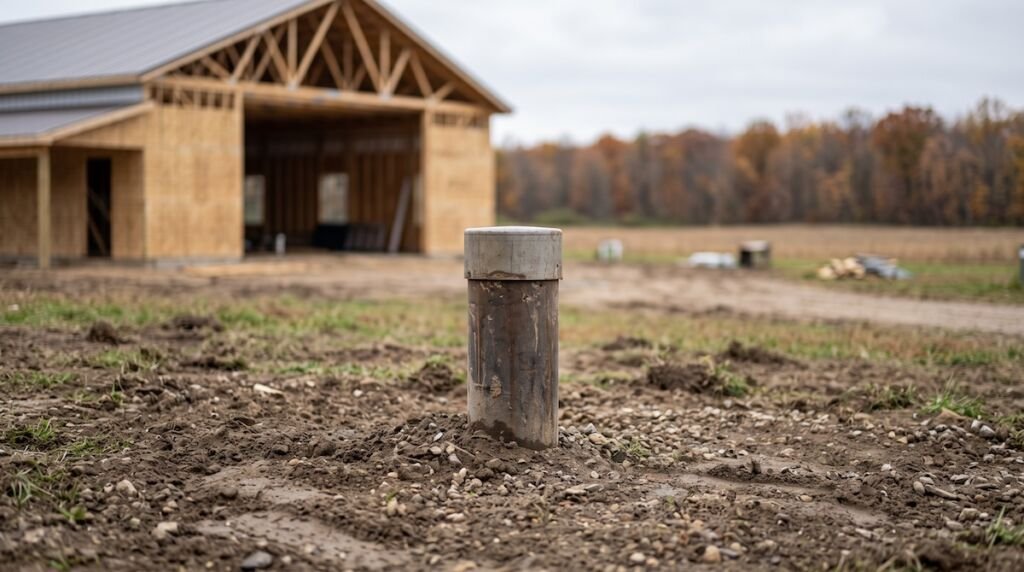
On rural acreage, your water comes from a private well and your wastewater goes into an onsite septic system. Both are permitted through the Livingston County Health Department, and its Environmental Health Division handles the well and septic programs.
The soil evaluation decides more than you think
Before a septic permit is issued, the soil has to be evaluated. A sanitarian looks at the soil type and how well it drains. Just as important is how close seasonal groundwater sits to the surface. Livingston County soils range from sand to heavy clay, so two parcels on the same road can get very different results.
Poor soil does not always kill a parcel. It may mean moving the drainfield or installing an engineered system. It can also mean the best building site on paper is not where the house can go. We like to see the soil evaluation done before the purchase closes, or at least before the floor plan is final.
Keeping the well and septic apart
State rules set minimum isolation distances between a private well and septic components. Under Michigan’s well construction code, a residential well must sit at least 50 feet from a septic tank or drainfield, and the health department can require more based on local geology and groundwater flow. Neighboring wells and septic fields count too.
In practice, we site the drainfield first, because it is the less flexible of the two. Then the well goes upslope and upgradient where possible, with the building and driveway fitted around both. Drainfields cannot have driveways or heavy equipment over them, which matters when planning where trailers will turn around beside a barndo shop.
Long Driveways and Utility Runs Across Acreage
Setting the building 600 feet off the road looks great. It also means 600 feet of driveway and the same length of utility trench.
Driveways that a fire truck can use
A long rural driveway has to carry concrete trucks, lumber deliveries, a well rig, and the crane or telehandler that sets trusses on a post-frame building. After move-in, it has to carry a fire engine. Width and turnaround space matter, along with overhead clearance under trees and a base that holds up through spring thaw. Fire apparatus access requirements vary by fire authority, so we confirm them with the local fire department during planning.
You will also need a driveway permit for the connection to the road, issued by the county road commission or MDOT depending on the road. Sight distance and culvert sizing are part of that review.
Bringing electric and gas in
Distance from the road changes the scope of utility work. Long runs can mean an extension agreement with the electric utility and a transformer placed closer to the building. Natural gas runs along many roads but not all of them, and some acreage buyers plan around propane instead. Call the utilities early, because their engineering and scheduling can take longer than framing.
We try to put electric and gas in one coordinated trench along the driveway, where both are easy to locate later. An empty conduit for internet service can share that trench.
Wetlands and EGLE Permits
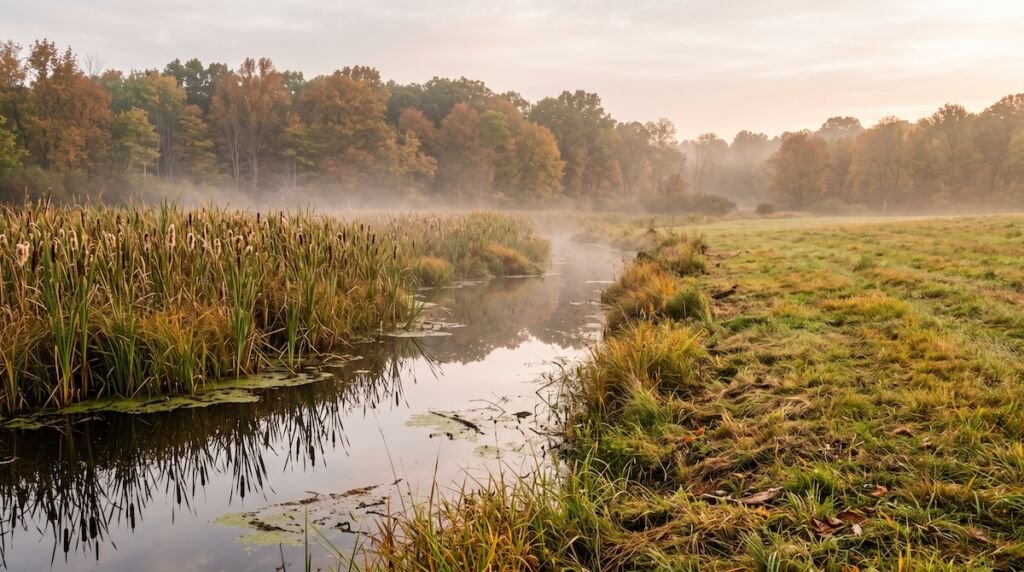
Livingston County has plenty of lakes and low ground. A parcel that looks like a dry hayfield in August can hold standing water in April.
Under Part 303 of the Natural Resources and Environmental Protection Act, the state environmental agency (EGLE) requires a permit before you fill, dredge, drain, or build in a regulated wetland. EGLE’s wetland permit page lists examples that include grading and placing fill, which covers more driveway and pad work than most buyers expect.
If the parcel has cattails or a low swale, have a wetland delineation done before you design the driveway route or building pad. Shifting a building 100 feet on paper is easy. Shifting it after a permit denial is not.
Barndominium Zoning in Livingston County, Michigan Townships
Each township writes its own zoning ordinance, and they do not all treat a steel-sided residence with an attached shop the same way. That makes a barndominium in Livingston County, Michigan, a very local project.
Agricultural versus residential districts
Many rural parcels sit in an agricultural or agricultural-residential district. Those districts often allow larger outbuildings and more flexibility on exterior materials. Parcels in a residential district, especially closer to Brighton or Hartland, may have stricter rules on exterior finish and minimum living area. Some ordinances include design standards that affect siding choices and roof pitch.
When the shop counts as the house
The other question is how the township classifies the shop portion. If the shop is attached under one roof, it is usually part of the dwelling and must meet residential building code, including fire separation between the garage area and living space. A separate pole barn falls under accessory building limits on size and setbacks. Genoa and Marion townships each publish their own ordinance, and we read the specific one for every site.
Our barndominium building services start with this zoning review so the design fits the parcel instead of fighting it. If you are still comparing parcels, our post on what to look for in a lot before building covers the broader site checklist, and the Livingston County building page explains how we work across the county.
Frequently Asked Questions
Can I build a barndominium on any acreage in Livingston County?
Not automatically. The parcel has to be a legally created lot that passes a soil evaluation for septic. It also needs to sit in a zoning district that allows a single-family dwelling. Confirm each of these before you buy.
How long does a land division take in Livingston County townships?
It depends on the township and on how complete the application is. Hartland Township’s ordinance, for example, gives the township 45 days to act on a complete application. Build that time into your purchase agreement as a contingency.
Who issues well and septic permits for a rural barndominium?
The Livingston County Health Department, through its Environmental Health Division, handles the soil evaluation and the well and septic permits. A licensed well driller and septic installer then do the work, and the department inspects it.
Does a long driveway change my building permit?
It can. You will need a road connection permit from the road authority, and the driveway should support construction traffic and emergency vehicles. We confirm access expectations with the local fire department during design so the driveway does not need to be rebuilt later.
Should I buy land before choosing a builder?
You can, but having a builder walk the land before closing often saves trouble, since drainage problems and long utility runs are hard to see on a listing. That review is part of a no-obligation consultation with us.
Talk to Us Before You Close on the Land
Acreage gives a barndominium in Livingston County, Michigan, room to breathe, but the land itself sets the rules for where and how the building goes. Splits, soil, setbacks, and access are all easier to solve before the deed is signed. We hold dual Michigan Residential Builder’s Licenses and bring 50 years of combined experience to every site. During the build, you get weekly updates with shared photo folders and open reporting of problems.
If you have a parcel in mind, or you are deciding between a few, contact Renaissance Building to set up a no-obligation consultation. Bring the listing, and we will walk through what it would take to build your barndominium there.