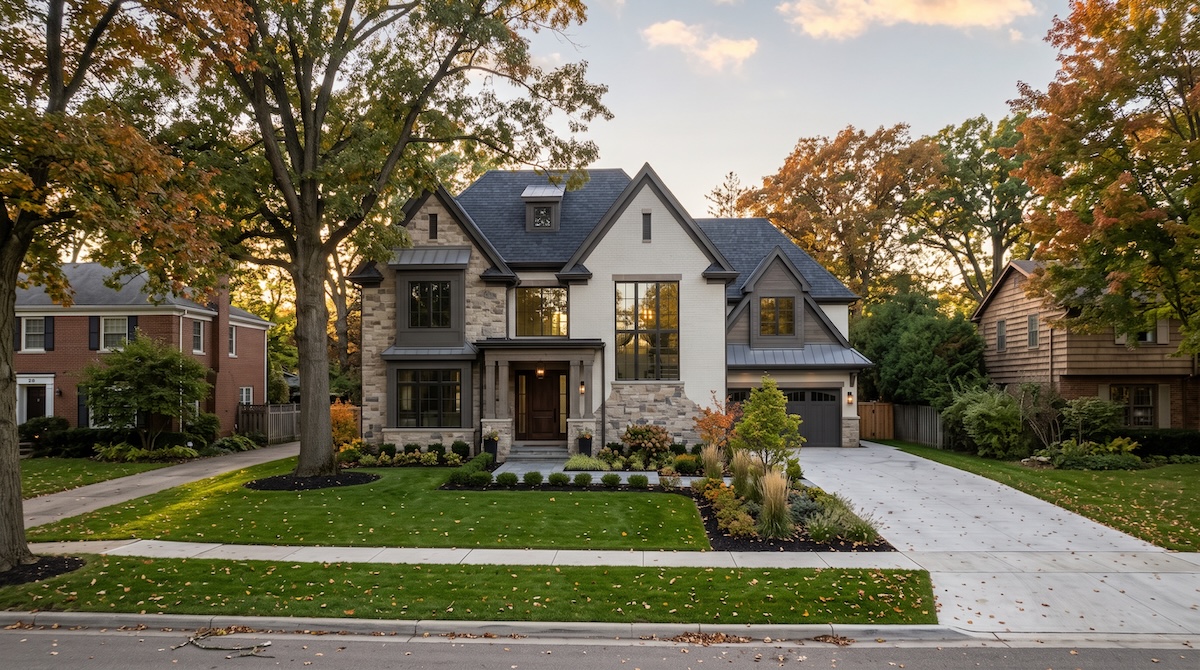
Plenty of families in Oakland County love their street but not their house. The lot has mature trees and sits a short walk from downtown. The house, though, is a 1950s ranch with a tired foundation and a floor plan that fights you every day. That is where a knockdown rebuild in Oakland County starts to make sense.
Tearing down a house and building new on the same land is common in communities like Birmingham, Bloomfield Township, Bloomfield Hills, and Royal Oak. It is also more involved than most people expect. The paperwork starts long before an excavator shows up, and the rules for the new house may not match what the old one got away with.
When a Knockdown Rebuild in Oakland County Beats Renovating
Renovation wins more often than people think. A solid house with good bones can take a new kitchen or a second-story addition without much drama. The math changes when the problems sit in the parts of the house you cannot easily see or move.
Foundation and Structure
Cracked block walls, bowing basement walls, chronic water intrusion, and settlement that has racked door frames out of square are all hard to correct under a standing house. If you plan to add a second story, the existing footings may not have been sized for that load. At some point, shoring an old foundation takes more effort than pouring a new one designed for the house you actually want.
Layout and Mechanical Systems
Some floor plans simply cannot be fixed. Low basement ceilings and load-bearing walls in the wrong places limit what a remodel can do. When the wish list includes an open main floor and a first-floor primary suite, a renovation can turn into rebuilding most of the house anyway, with old constraints still attached.
Older homes here often carry outdated wiring, galvanized supply lines, aging cast-iron drains, and ductwork never designed for central air. Replacing all of it means opening nearly every wall and ceiling. Once a project reaches that point, starting fresh with modern framing and better insulation usually produces a better house for the effort.
Demolition Permits and Hazardous Materials
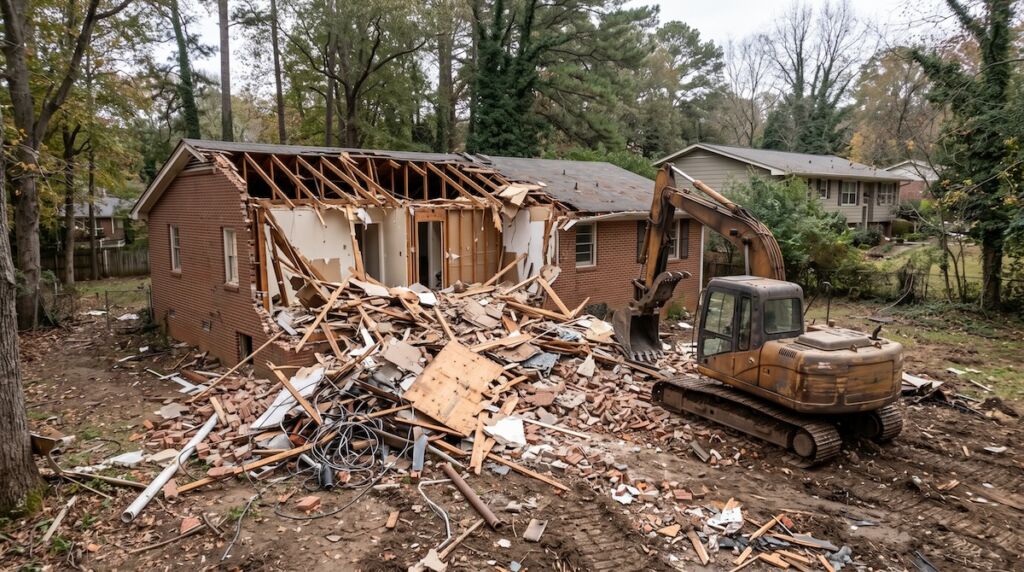
A teardown is a permitted project in its own right. Each township and city in Oakland County runs its own building department, so the exact steps vary, but the general pattern is consistent.
Disconnecting Utilities the Right Way
Before demolition, the gas and electric services have to be formally retired by the utilities, and the local water and sewer departments need to shut off and cap their connections. Bloomfield Township’s residential demolition permit packet is a good example of what a municipality may ask for. It lists a wrecking clearance from the electric utility, a gas service retirement letter, proof of refrigerant recovery from the air conditioner, and an inspected sanitary sewer cap. Homes on septic or a private well have their own steps involving the county health division.
Asbestos and Lead Before the House Comes Down
Many houses built before the 1980s contain asbestos in places like pipe wrap, floor tile, plaster, and old siding. Lead paint is common in homes built before 1978. Plan on a professional asbestos inspection before demolition, and have any regulated material removed by a licensed abatement contractor before the structure is taken down.
In Michigan, two state agencies handle most of this. EGLE, the state’s environmental agency, oversees the federal asbestos air rules and receives the Notification of Intent to Renovate/Demolish. MIOSHA regulates worker protection and licensing for asbestos abatement. Whether a single-family teardown requires an EGLE notification can depend on the circumstances of the project, so confirm current requirements on EGLE’s asbestos program page and with your building department before scheduling demolition.
Some communities also require soil erosion controls before a demolition permit is issued, or set deadlines for grading the site if new construction does not follow right away. Coordinating the demolition permit with the new building permit keeps the lot from sitting as an open hole while paperwork catches up.
Zoning Rules That May Not Match the House You Have Now
This is where many knockdown projects run into surprises. The old house was built under the zoning code of its day. The new house has to meet the code in effect when you apply.
Setback and Height Limits
Required setbacks from the lot lines may have changed since the original home went up, and lot coverage limits may cap how much of the parcel the house and other structures can cover. Height limits, and the way a community measures height, can also restrict a second story or a steep roofline. A survey and a zoning review early in design will show the real buildable area before anyone draws a plan that cannot be approved.
Nonconforming and Grandfathered Structures
If the existing house sits closer to a lot line than current rules allow, it is likely a legal nonconforming structure. That status usually protects the building as it stands, but it often does not carry over once the house is demolished. In most cases the new home must comply with today’s setbacks. Variances through a zoning board of appeals are possible in some communities, but they are never guaranteed, and they add time.
HOA and Historic District Review
Birmingham has seen a steady stream of teardowns over the past decade, and the city protects some older homes through historic district designation. If your property sits inside a local historic district anywhere in the county, demolition may require approval from a historic district commission. Subdivisions in Bloomfield Township and Bloomfield Hills may also have deed restrictions or an HOA architectural committee that reviews new home designs and exterior materials. Get those documents early.
Tree Protection Ordinances
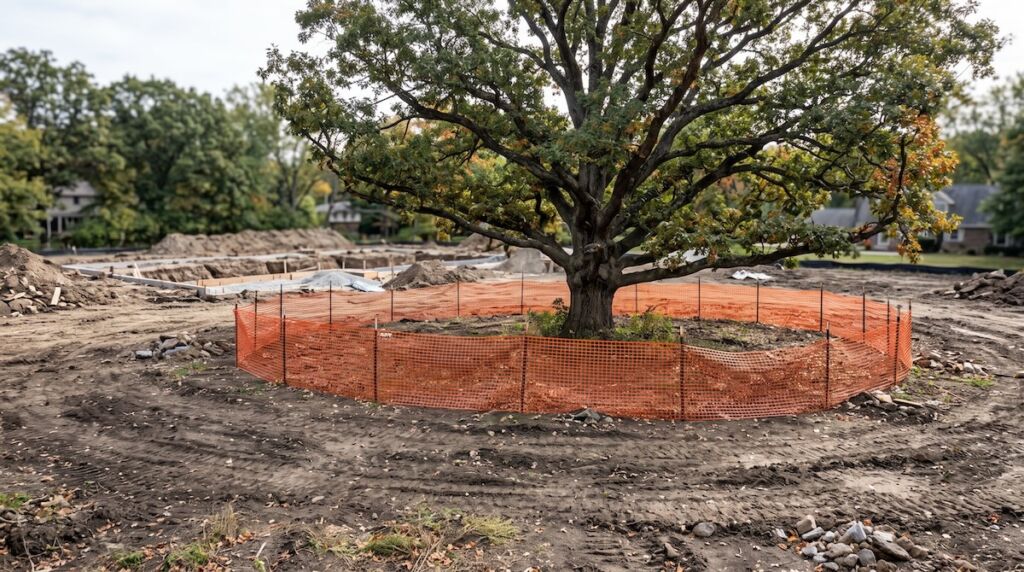
Mature trees are often why people love an established lot. Several Oakland County communities have tree preservation ordinances that require a tree survey or replacement of removed trees. Bloomfield Township, for example, asks for a tree preservation survey on the demolition site plan. Fencing off the root zones of trees you want to keep also protects them from heavy equipment.
Utility Taps and Where You Live During the Build
Reusing Water and Sewer Connections
One real advantage of building on an existing lot is that the property is usually already served by municipal water and sewer. Depending on the age and size of the existing laterals, your builder may be able to reuse the taps rather than open new connections at the main. Older lines sometimes need replacement anyway, especially if the new house has more bathrooms. Your local public works department will tell you what can be reused.
Planning for the Months Away
A knockdown rebuild means living somewhere else through demolition and construction. Families often rent nearby to keep school and work routines intact. Build some cushion into the rental timeline, because winter weather and permit reviews can both shift a schedule.
Our clients receive weekly updates with shared photo folders and schedule changes. When a problem comes up, we report it openly, which matters even more when you are watching the house go up from across town.
How Renaissance Building Approaches Teardown Projects
Our team helps you plan a custom home around your property, priorities, and budget. On a teardown, our first job is answering the zoning and site questions before anyone falls in love with a floor plan. You can see how we approach local rules on ourOakland County custom home building page.
Many knockdown clients want a higher finish level than the one in the house they are replacing. Our luxury custom homes work, including the Ridgeway project, shows the detailing we bring to that level of build. To understand what drives budgets, read our guide on what it costs to build a custom home in Oakland County, and remember that demolition and abatement add their own line items.
Frequently Asked Questions
Is a knockdown rebuild in Oakland County cheaper than a major renovation?
It depends on how much of the existing house would survive the renovation. When both the foundation and the mechanical systems need major work, rebuilding often delivers more value for the effort. A builder can compare both paths once the condition of the house is known.
Can I rebuild on the same footprint as my old house?
Not always. If the old house is a legal nonconforming structure, that status typically ends when it is demolished, and the new home must meet current setbacks and lot coverage rules. Check with your planning department before you design around the old footprint.
Do I need an asbestos inspection before demolishing my house?
You should plan for one, especially on homes built before the 1980s. Any regulated asbestos should be removed by a licensed abatement contractor before demolition. Confirm notification requirements with EGLE and your local building department.
How long does the demolition phase take?
The physical teardown is usually quick. Utility disconnects and permit approvals take far longer, as does any abatement work, so start that paperwork well before your target demolition date.
Can I keep the mature trees on my lot?
Often, yes, with planning. Mark the trees you want to keep before design starts so the new house can be placed away from their root zones. Protective fencing during construction helps too.
Start Your Oakland County Knockdown Rebuild With a Clear Plan
A teardown works best when the zoning and hazardous material questions are answered before demolition day. If you own an older home on a lot you want to keep, we can review your property and flag the rules that will shape the new house. Contact Renaissance Building to schedule a no-obligation consultation.