Let’s name it directly, because this is the fear that sits at the back of every custom home buyer’s mind from the day they sign a contract to the day they get their keys.
You call your builder on a Tuesday to ask about a framing question that’s been bothering you. No answer. You leave a voicemail. You send a text. Wednesday passes. Thursday comes. You drive by the site and notice the crew isn’t there. You call again. This time, someone picks up a crew member who doesn’t speak with you directly, who says the builder will call back. He doesn’t.
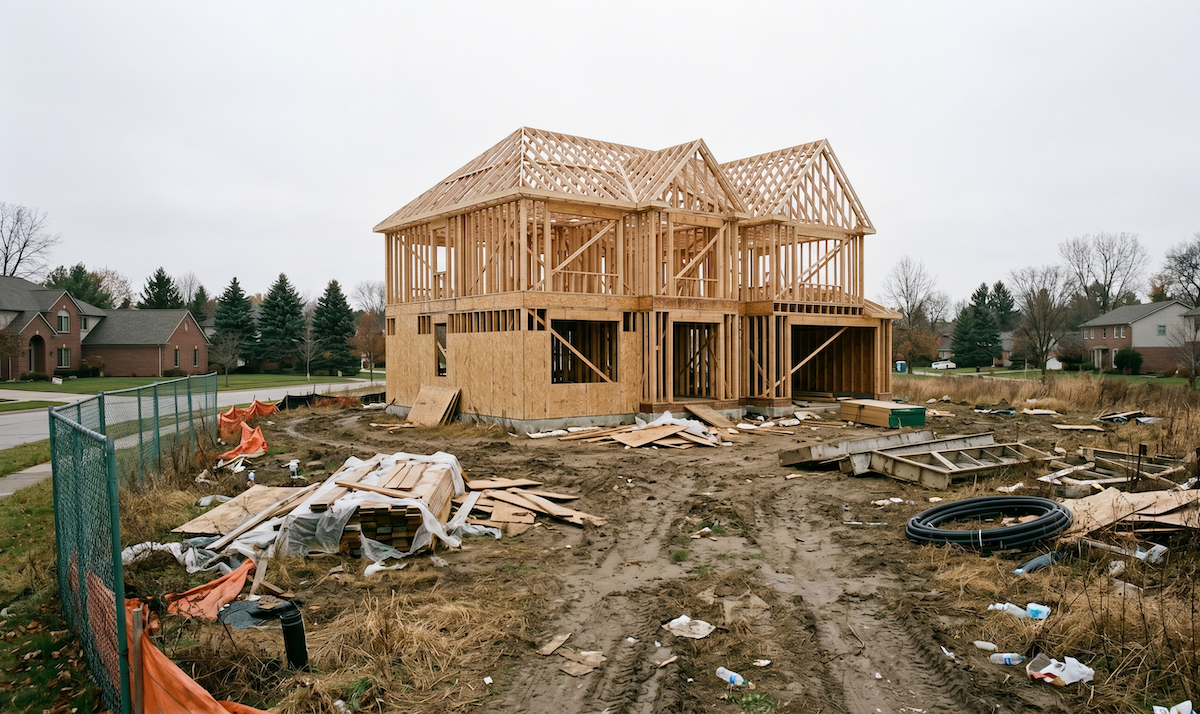
By Friday, you have $800,000 sunk into a partially framed house in Oakland County, Michigan, and the person responsible for finishing it has effectively vanished.
This isn’t a hypothetical. It happens. It happens more often than the industry likes to admit. And the damage it causes is financial, emotional, and practical.
Why This Happens
Builders who go silent on clients rarely set out to do so. The more common pattern is a cascade of failures that starts with an overextended business and ends with a homeowner standing in a field, wondering what happens next.
Here’s how it typically unfolds.
A builder takes on more projects than his team can manage because business is good and the instinct is to say yes. Each project gets a little less attention. Subcontractors are starting to get squeezed on payment terms because the builder’s cash flow is stretched across too many active sites. Subs who aren’t getting paid stop showing up promptly or at all. The builder, now managing crises on multiple fronts simultaneously, starts triaging. The client who is least likely to escalate gets less attention. The calls he doesn’t know how to answer go unanswered.
Meanwhile, you’re waiting.
The second cause is structural: many builders have no actual communication system. No project management software. No scheduled update process. No one is dedicated to keeping clients informed. Updates happen reactively when the client demands them rather than proactively. That reactive model works when everything is going smoothly. When it isn’t, the builder avoids the conversation because delivering bad news is uncomfortable, and he hasn’t built the relationship structure to do it well.
The third cause is scope ambiguity. Builders who never locked down a detailed scope of work in writing are constantly managing a moving target. Change orders pile up. Costs climb. The builder is in an awkward position, telling the client the project now costs $200,000 more than originally discussed, and he’s been delaying that conversation for 3 months. The longer he delays, the harder the call becomes. Eventually, avoidance feels easier than accountability.

What This Costs You
The financial damage of a communication breakdown in a custom home build is real and specific.
Delays are expensive. If a builder goes quiet for three weeks and your framing crew sits idle, you’re paying interest on your construction loan for a project that isn’t moving. Construction loan interest on a $1.5M project at current rates runs $8,000 to $12,000 per month. A six-month delay, which is not uncommon when a builder is in distress, adds $50,000 to $70,000 in carrying cost alone, before accounting for the actual construction work that isn’t getting done.
Subcontractor coordination breaks down when a builder goes dark. Scheduled trades don’t appear because no one has confirmed the schedule. Material deliveries arrive with no crew to receive them, or don’t arrive at all because orders weren’t placed. Re-scheduling trades in Michigan’s competitive construction market can add weeks to a timeline.
If the relationship deteriorates badly enough, you may face the prospect of terminating your builder mid-project and finding someone willing to pick up another builder’s incomplete work. That’s one of the most expensive and difficult positions a homeowner can be in. The new builder has to assess the existing work, identify what was done incorrectly, and price the project, knowing they’re inheriting someone else’s problems. You almost always pay a premium for that.
And then there’s the emotional cost, which doesn’t show up on a budget sheet but is very real. The biggest financial decision of your life is stalled. You don’t know what’s happening. Every day without information is a day of low-grade anxiety. For some families, this period causes genuine stress and conflict. That’s a cost too.
How to Identify Builders Who Won’t Do This
Here’s the good news: the warning signs are visible before you sign, if you know what to look for.
Ask every builder you’re considering: What is your communication process during construction? A builder with a system will answer that question specifically. Weekly updates. Photo documentation. A project management platform where you can see the schedule in real time. A named point of contact for day-to-day questions.
A builder without a system will give you a vague answer. “We stay in close contact.” “You can always reach me.” “I’m very responsive.” These are not systems. These are personality claims that have no accountability structure behind them. When things get hard, and in any complex construction project, something will get hard, and personality claims will evaporate. Systems don’t.
Ask for references from clients whose homes were built, not just clients who liked the builder at the beginning. Specifically ask references: when something went wrong during construction, how did the builder handle it? How quickly did they respond? Did you ever feel left in the dark? Those answers tell you more than any testimonial on a website.
Look at their current workload honestly. A builder who is managing fifteen active projects with a small team is going to give each project a fraction of the attention it deserves. Ask how many projects they’re currently building and how many project managers they have on staff. The math matters.
Ask about the pre-construction process. A builder who commits everything to writing before construction starts, scope, specifications, pricing, and timeline is a builder who has the organizational discipline to manage a project. Builders who operate on verbal understandings and rough estimates are the same ones who can’t have the hard conversations later because nothing was ever clearly defined enough to hold them accountable.
What the Renaissance Building Process Looks Like Instead
At Renaissance Building, the communication system is built into the business model rather than added as a feature.
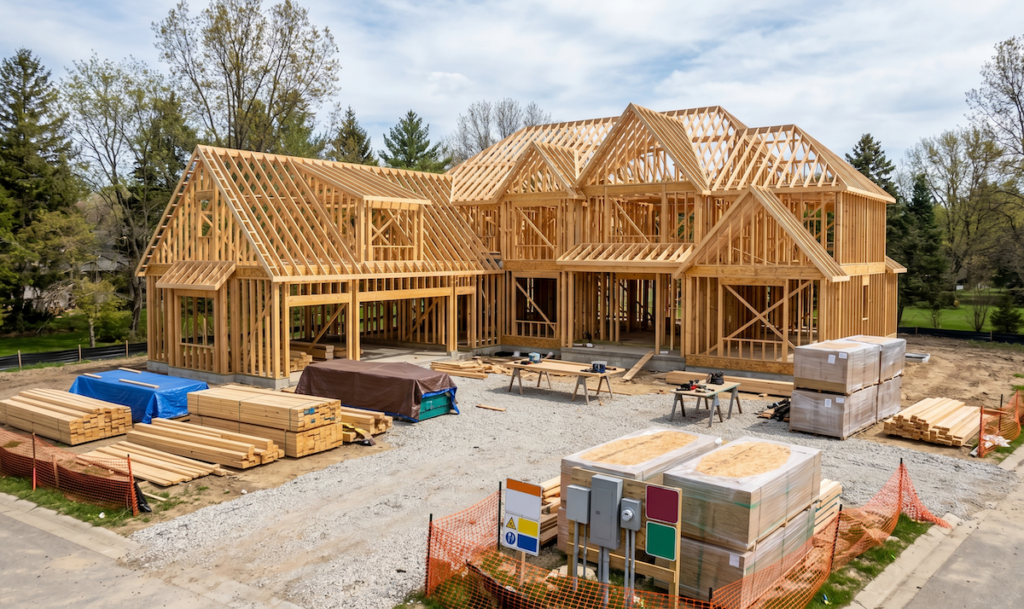
From the day construction begins, you receive weekly photo updates and weekly schedule updates. You don’t call to ask what’s happening. We tell you before you think to ask. You have a shared photo folder that documents progress in real time. You have a realistic timeline established in your pre-construction agreement, and you receive weekly updates on your progress against it.
When something unexpected happens in custom home construction in Michigan, weather, supply chain, and subcontractor schedules can create issues on every project, and we will tell you immediately. We explain the cause. We will tell you the plan. We give you a revised timeline. That’s not a special response to a crisis. That’s Tuesday.
Mark and Anthony bring 50 years of combined experience to every project. They’ve built enough custom homes to know that the relationship between a builder and a homeowner is built on trust, and that trust is built week by week through honest communication. You don’t get a crew you never meet. You get the licensed builders who are accountable to you personally.
Two Michigan builders’ licenses are required for every project. Fully insured. Veteran-owned. A father-and-son team that treats your build the way they’d treat their own.
If you’ve spent any time imagining the scenario described in this blog and you’ve gotten this far, you probably have the antidote: choosing a builder whose process prevents it by design, not by promise.
Call Renaissance Building at 248-859-5943 or schedule a consultation online. Let’s talk about your project before you commit to anyone. You’ll know within the first conversation whether you’re talking to a builder with a system or a builder with a pitch.
FAQs
Q: What should I do if my current builder has stopped communicating?
A: Document everything first, save all texts, emails, and voicemails. Send a written notice via email requesting a response by a specific date. If you have a contract, review the terms for communication expectations and dispute resolution. If communication has genuinely broken down, consult a Michigan construction attorney before taking any further action, including termination. Acting without legal guidance in a mid-project dispute can complicate your position significantly.
Q: How many projects should a custom home builder be managing at once?
A: There’s no universal number, but the ratio of active projects to project management staff matters more than the raw count. A builder with two project managers actively supervising sites can handle more projects responsibly than a solo operator with five going simultaneously. Ask specifically how many projects are active and who is responsible for the day-to-day management of yours. A builder who will be personally present on your site should be able to tell you how much time that commitment actually allows.
Q: What communication should I expect from my builder during construction?
A: At minimum, you should expect a defined update schedule, not reactive communication, only when you call. Weekly updates that include schedule status and photographic progress documentation are reasonable expectations for a custom home in the $1M+ range. If a builder can’t describe their communication system specifically before you sign, assume they don’t have one.
Q: Is a pre-construction agreement legally binding in Michigan?
A: A properly executed pre-construction agreement is a contract and is enforceable in Michigan. It should define scope, specifications, pricing, timeline, and the process for managing changes. A vague or verbal agreement offers you little protection. Always insist on a written, detailed scope before construction begins, and review it with an attorney if the contract value warrants it. The few hundred dollars a construction attorney charges to review a contract is inexpensive insurance on a million-dollar project.