Almost nobody starts a custom home expecting it to be stressful. The plans are exciting, the land feels full of possibility, and the finished home is easy to picture. Yet many homeowners describe the build itself as one of the most draining experiences of their lives.
In our experience, that stress rarely comes from the design. It comes from five predictable gaps in how the project is managed. Close them early, and building becomes far more enjoyable.
Allowances that don’t reflect real choices
An allowance is a placeholder in the budget for an item not yet selected: lighting, tile, appliances, cabinetry. When allowances are set low to make a proposal look attractive, the real selections arrive later as overages, and the budget feels like it is slipping away.
Ask how each allowance was set and what it actually buys. Better still, make the major selections before construction so fewer items depend on allowances at all. A budget built on real choices is a budget you can trust.
Changes without a paper trail
Every custom home evolves. A window moves, a room grows, a finish changes. Trouble starts when those changes are agreed casually on site, with no written record of cost or schedule impact.
A disciplined process documents every change before the work proceeds: what is changing, what it costs, and how it affects the timeline. Both sides sign off. It sounds simple, and it is, but it removes one of the most common sources of conflict on a custom build.
Selections made under pressure
When finish decisions are left until the framing is up, homeowners end up making dozens of choices in a few weeks, often while the schedule waits on them. Long lead times for items like windows, cabinetry and specialty materials make that pressure worse.
A selections schedule set at the start tells you which decisions are due and when. You get time to visit showrooms, compare options and decide with confidence, and the build keeps moving.
Communication that depends on chasing the builder
Few things create anxiety faster than not knowing what is happening on your own property. If every update requires a phone call, small questions grow into big worries.
Predictable communication changes that. At Renaissance, clients receive weekly progress updates with photos and schedule information, plus direct access to the people responsible for the build. These updates help you understand progress, upcoming work and decisions.
A schedule that ignores real sequencing
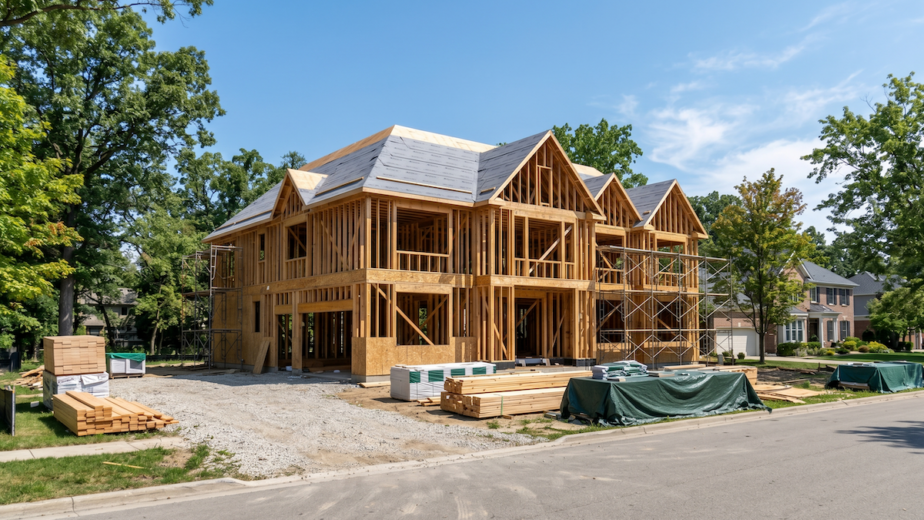
A custom home is a chain of dependent steps. Permits come before excavation; the foundation comes before framing; inspections gate each phase; some materials must be ordered weeks or months ahead. Michigan weather adds another layer, particularly for excavation and concrete work.
A realistic schedule accounts for all of it up front instead of promising a date that ignores how construction actually unfolds. Our guide to the custom home build process in Michigan explains each stage and what to expect.
A calmer way to build
The common thread is planning. When the scope, the selections, the change process and the schedule are settled before construction begins, the build itself becomes far calmer. That is the purpose of our pre-construction agreement: we document the scope, selections and schedule before construction and manage subsequent changes in writing.
If you are considering a luxury custom home, we’d be glad to talk through your plans in a private, no-obligation consultation.