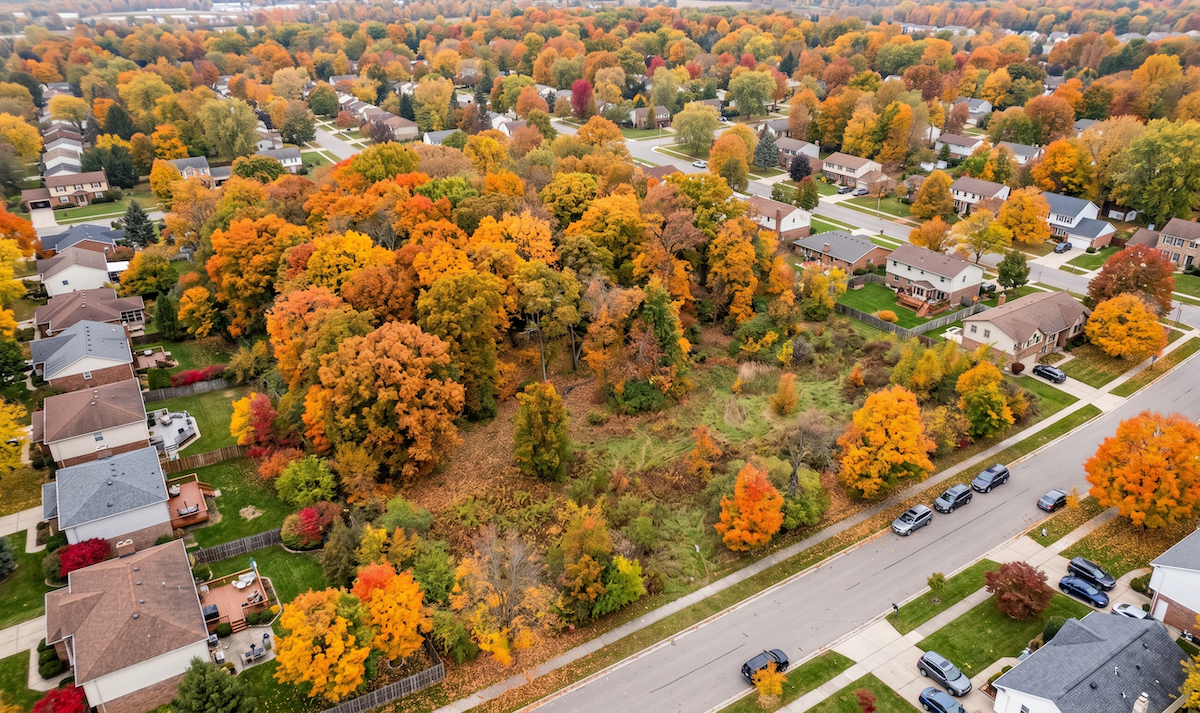
Most buyers fall in love with a piece of land before they ask the question that matters most: Is this lot actually buildable for the home I want to build?
It’s easy to make this mistake. You drive out on a Saturday afternoon. The trees are beautiful. The neighborhood feels right. You can already picture where the house sits. You make an offer before you’ve talked to a builder, before you’ve checked the soil, before you’ve asked a single question about drainage, setbacks, or what it will cost to get utilities to that parcel.
Six months later, you discover the lot has a designated wetland buffer that eliminates 40% of what you thought was buildable space. Or the soil conditions require an engineered foundation that adds $80,000 to your budget. Or the township’s setback requirements mean your 4,500-square-foot footprint doesn’t fit the way you planned.
This blog exists to prevent that. Here’s what to evaluate with a builder, before you buy.
Drainage and Soil Conditions
Water is the single biggest hidden cost variable in land development. A lot that drains poorly creates problems during construction and after you move in. In Metro Detroit and Oakland County specifically, you’ll encounter everything from well-draining sandy soils to heavy clay that holds water and expands and contracts with freeze-thaw cycles.
Before purchasing, you want to know where water goes when it rains. Does it sheet off naturally, or does it pool in the areas where you’d be building? Are there low points that suggest a seasonal high water table? A percolation test required in many townships for septic approval will tell you a great deal about the soil’s drainage capacity. If a lot has standing water in the spring, assume that’s a recurring condition, not a one-time event.
Clay-heavy soils may require over-excavation, engineered fill, and additional foundation waterproofing. That’s not a dealbreaker, but it’s a cost you need to budget for from day one.

Zoning and Permitted Uses
Just because a parcel is zoned residential doesn’t mean it allows the type of home you want to build. Some residential zones restrict accessory structures, meaning your planned detached garage or guest house may not be permitted. Some restrict building height. Some prohibit certain foundation types. Agricultural zoning, which covers significant portions of rural Oakland County, has its own overlay of permitted uses.
If you’re building a barndominium or a home with a large shop space, zoning is especially critical. Many townships haven’t updated their zoning codes to accommodate metal-structure residential buildings, and you may need to apply for a variance or conditional use permit. This process takes time and isn’t guaranteed.
Pull the township’s zoning ordinance before you make an offer, or ask your builder to review it. An experienced builder has seen enough zoning issues to spot a problem quickly.
Setback Requirements
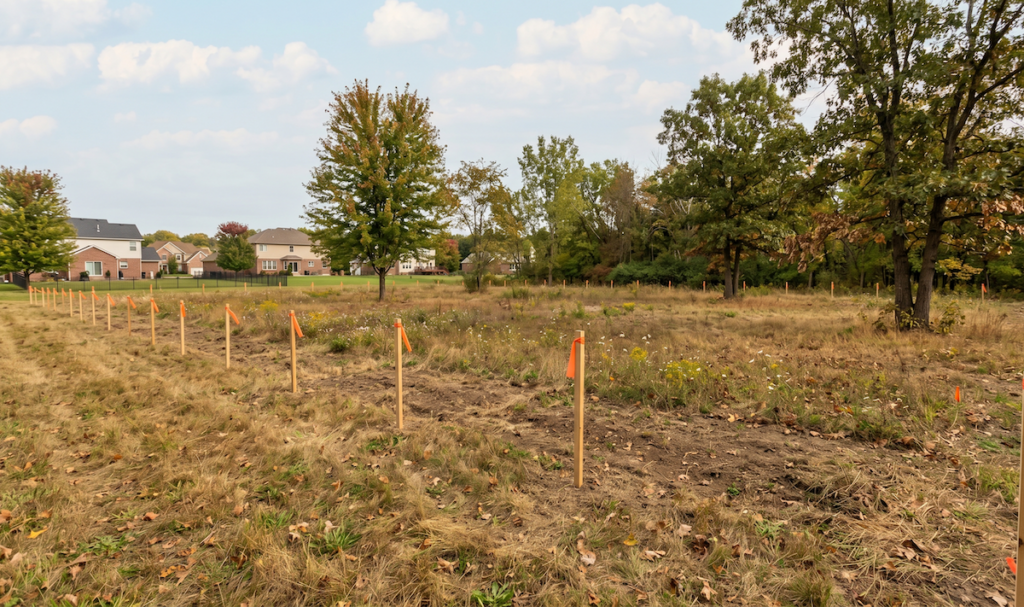
Every township in Michigan has front, rear, and side setback requirements, the minimum distance between your structure and the property lines. What appears to be a buildable lot may not accommodate your intended footprint after setbacks are applied.
On a 1.5-acre parcel, setbacks might still leave you with a generous building envelope. On a narrower lot, even one that’s 2 acres in total, a 50-foot front setback, a 30-foot rear setback, and 15-foot side setbacks can reduce your buildable rectangle dramatically. If your design requires a three-car garage across the front elevation, that width has to fit within the envelope.
This is one of the most common lot-fit surprises we see. A builder can sketch a basic site plan in the first conversation and tell you whether your intended home fits the buildable envelope. Most buyers don’t think to ask this until they’re already under contract.
Utility Access
Municipal water and sewer access dramatically simplifies construction and reduces upfront cost. In suburban Oakland County, Bloomfield Hills, Rochester Hills, Troy, and Birmingham, most lots have access. In more rural townships, such as Independence, Springfield, Brandon, and Holly, you may be looking at a private well and septic system.
A well and septic system aren’t red flags, but they are budget items. A standard well installation in Oakland County runs $8,000 to $15,000. A conventional septic system runs $12,000 to $25,000. If the perc test fails and you need an engineered alternative system, a mound system, or an aerobic treatment unit, costs can climb to $30,000 to $50,000 or more.
Natural gas availability matters too. If the road has gas service, you can connect. If it doesn’t, you’re choosing between propane (with a tank on the property and ongoing delivery cost) or an all-electric design with a heat pump system. Both work well, but both need to be planned from the beginning, not retrofitted after the fact.
HOA Restrictions
Homeowners association restrictions range from minor to project-defining. Some HOAs in Metro Detroit restrict exterior material choices, prohibiting metal roofing, limiting siding options, and requiring certain color palettes. Others restrict the size of structures, building height, or the number of outbuildings. A few restrict the type of contractor you can use or require architectural review committee approval before permits are pulled.
Read the HOA documents before you close on a lot. More specifically, have your builder read them. What looks like a manageable restriction to a buyer may be a real constraint when translated into a construction plan.
Slope and Tree Coverage
Significant slope is a double-edged variable. A lot with a strong grade from front to rear can accommodate a walk-out lower level, a genuine lifestyle, and a resale advantage. But that same slope requires more excavation, more concrete, and more site work. If the slope is lateral, side-to-side, it’s more complicated and typically less useful as a design feature.
Dense tree coverage looks beautiful and creates natural privacy, but it creates construction logistics. Tree removal is expensive. Root systems from mature trees can interfere with excavation and foundation work. Some trees are protected by local ordinance and can’t be removed without a permit or a fine. Before you build, you need to know which trees stay, which ones go, and what’s required to take them down.
The Real Question: Talk to a Builder Before You Buy
Here’s what all of this adds up to: the best thing you can do before purchasing land is have a builder walk it with you. Not after. Before.
At Renaissance Building, we’ll evaluate your lot conditions, review the zoning requirements, check utility access, sketch a basic site plan, and give you an honest read on what that parcel will cost to develop. We’ve seen lots that looked perfect on paper and created expensive problems in the field. We’ve also seen lots that looked challenging and turned out to be ideal building sites once the full picture was understood.
That conversation costs you nothing. Buying the wrong lot costs you everything. Call us at 248-859-5943 before you make an offer. It’s the most important call you’ll make in this process.
FAQs
Q: Do I need a builder involved before I purchase land?
A: You don’t legally need one, but you absolutely should have one. A builder can identify soil issues, setback constraints, utility access gaps, and zoning conflicts that aren’t obvious to a buyer and that can make a lot significantly more expensive to develop than the purchase price suggests. At Renaissance Building, we walk prospective clients through lots before purchase as part of our standard process.
Q: What is a perc test, and when do I need one?
A: A percolation test evaluates how quickly water drains through the soil on a given parcel. It’s required in Michigan when a lot will use a private septic system rather than municipal sewer. The results determine what type of septic system can be installed and whether a standard system is viable at all. If many fail the perc test, an engineered alternative system is required, which significantly increases costs.
Q: Can I build a barndominium on any residential lot in Metro Detroit?
A: No. Barndominium construction involves metal-structure buildings that many townships haven’t specifically addressed in their zoning codes. Some zoning districts prohibit or restrict the use of metal exterior materials. Others require a conditional use permit or variance. Always verify zoning compatibility for your specific building type before purchasing a lot. This is an area where working with a builder who has experience with both custom homes and barndominiums makes a significant difference.
Q: What are setbacks, and how do they affect my building plans?
A: Setbacks are the minimum distances required between your structure and each property line front, rear, and sides. Every township sets its own requirements. Even on a generously sized parcel, setbacks can substantially reduce your buildable area. Before purchasing, your builder should map the setback envelope against your intended home footprint to confirm the design actually fits the lot.