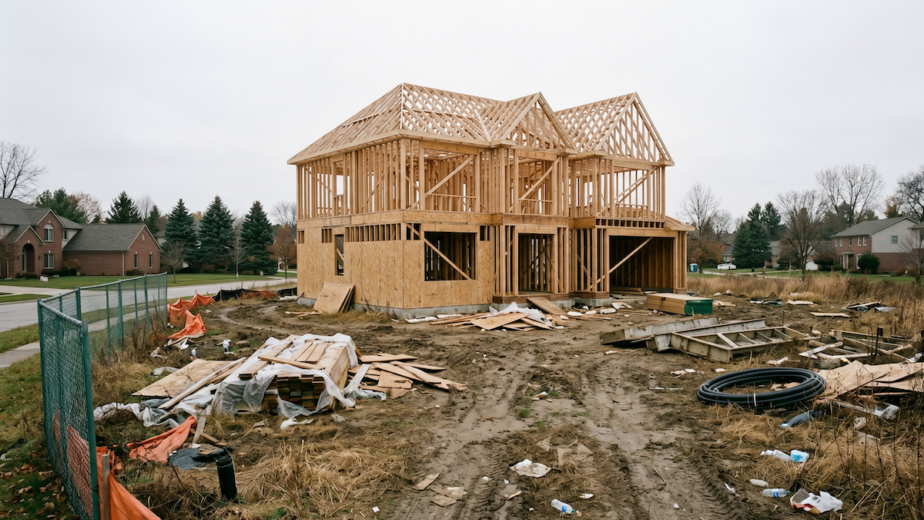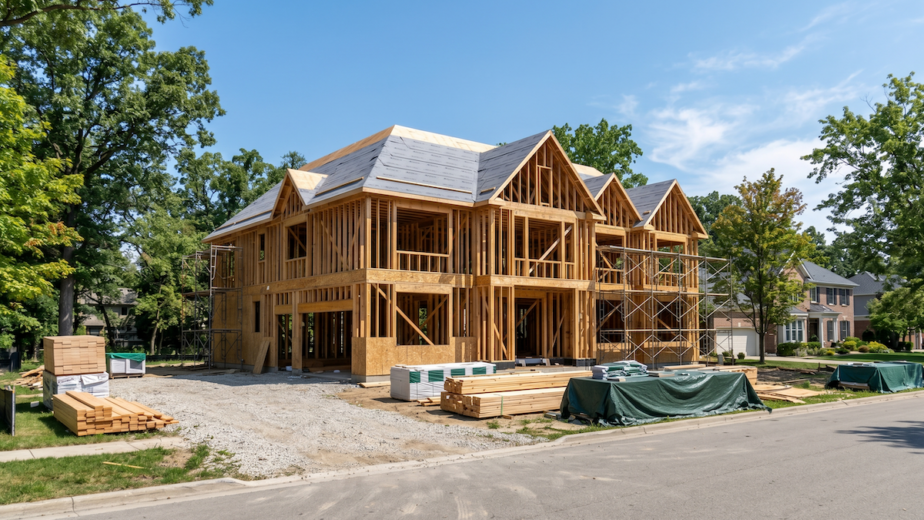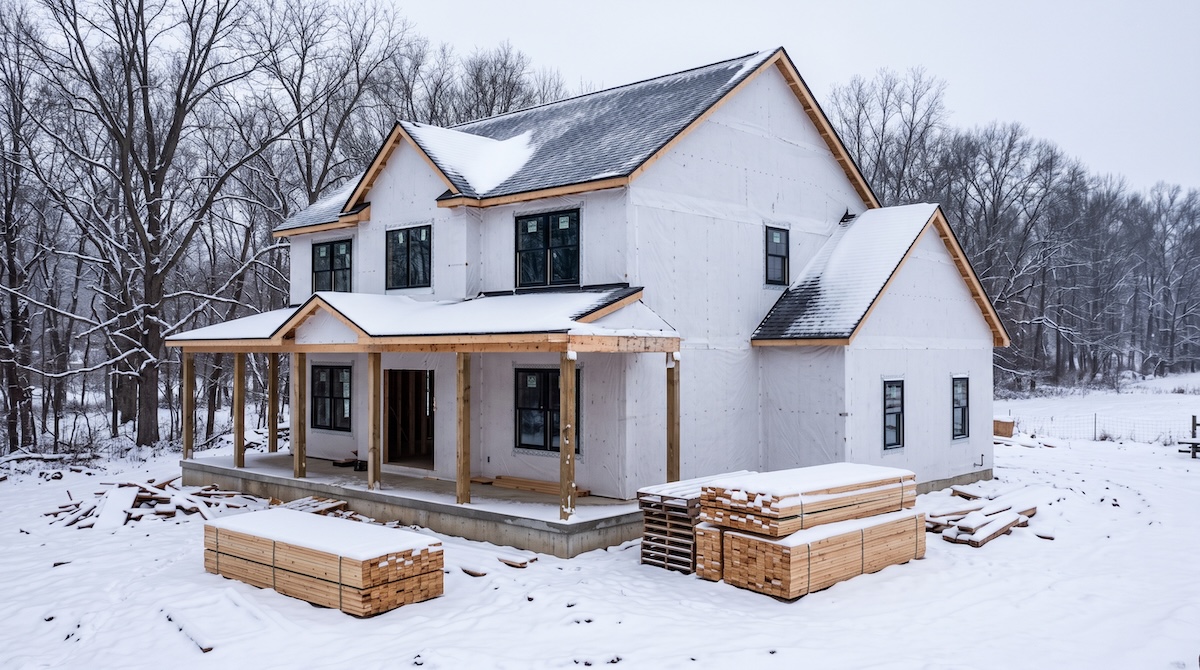
Many people assume construction in southeast Michigan stops at Thanksgiving and resumes in spring. That is not how it works. Building a house in winter in Michigan is routine for experienced crews, as long as the schedule is built around the cold instead of pretending it will not arrive.
Some phases slow down in January. Others hardly notice the weather once the house is closed up. The difference comes down to sequencing, so this post walks through what actually happens on a jobsite between November and March.
How Building a House in Winter in Michigan Actually Works
A house is built from the ground up, and the ground is the part winter affects most. Excavation and concrete happen in the open, exposed to frozen soil and wind. Framing is outdoors too, but carpenters work through cold days with the right gear. Once the roof is on and the windows are in, much of the remaining work moves inside.
That is why sequencing matters more than the calendar. A project that has its foundation poured and its shell closed before the deep cold sets in can keep moving through the worst months. A project that is still waiting on footings in late December faces a harder road, with extra protection steps on every pour.
Frost Depth and Footings Below the Frost Line
Footings are the concrete base that carries the weight of the house. If they sit too shallow, freezing water in the soil can expand and push them upward. This is called frost heave, and it is the reason footing depth is regulated in Michigan.
What the Code Requires
The Michigan Residential Code design table lists a frost line depth of 42 inches, which is the figure most builders in our area work to. The code also lets the local building department set the minimum footing depth for its jurisdiction, so the township or county inspector has the final word. Before any digging, confirm the required depth with the building department that will inspect your project.
Digging When the Ground Is Frozen
A skilled operator can break through frozen topsoil and open a foundation hole in January. It is slower, and frozen chunks cannot be used as structural backfill. The bigger concern is what happens after the hole is dug. Exposed soil at the bottom of a trench will freeze overnight if nobody protects it.
Lots with high groundwater or heavy clay add another wrinkle. Water collects in the excavation, and it has to be pumped out before it freezes. Our post on site prep and permit timelines for a Wixom custom home covers the warm-season side of that early work.
Pouring Concrete in Cold Weather
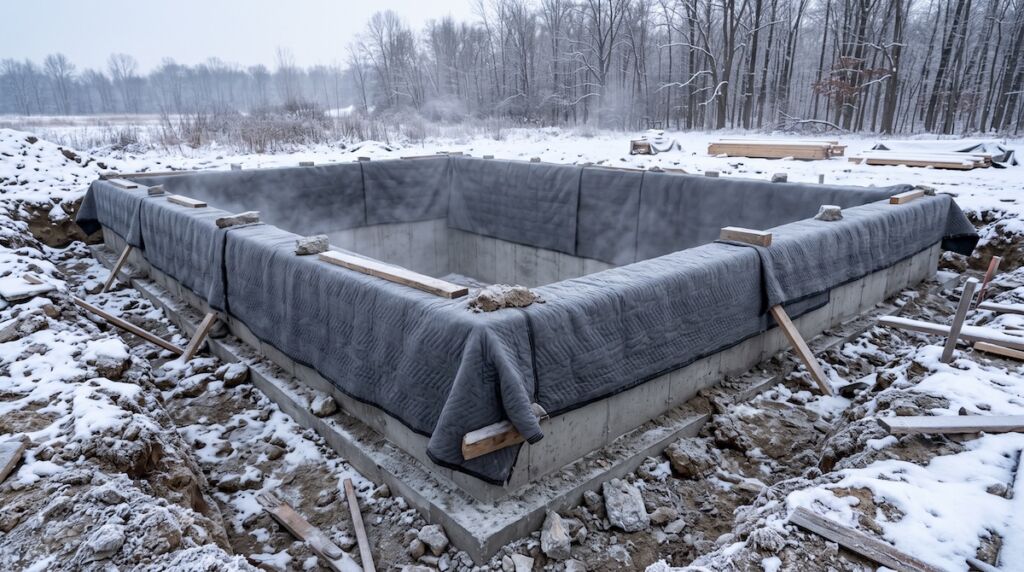
Concrete does not dry. It cures through a chemical reaction that produces its own heat, and that reaction slows sharply in the cold. If fresh concrete freezes before it gains enough strength, the water inside it expands and damages the material permanently.
Protecting the Subgrade
Concrete should never be placed on frozen ground. Guidance from the USDA Natural Resources Conservation Service on cold weather concreting calls for removing all snow and ice from the subgrade before placement. It also notes that frozen ground can sometimes be thawed by covering it with insulation for a few days ahead of the pour.
In practice, crews lay insulated blankets over footing trenches as soon as they are dug and inspected, and ground heaters can thaw soil that has already frozen. Skipping this step leads to settlement later, when the frozen soil thaws in spring and shrinks away from the concrete.
Keeping Fresh Concrete Warm
Once the concrete is in the forms, the job is to hold in the heat it generates. Insulated curing blankets go on right after finishing, with extra attention to corners and edges, which lose heat fastest. For basement walls and slabs in hard cold, crews build plastic or tarp enclosures and run vented heaters inside them.
Ready-mix suppliers also adjust the mix. They use heated water and can add a non-chloride accelerating admixture that speeds early strength gain. Calcium chloride accelerators are generally avoided around reinforcing steel because they can promote corrosion. This is standard cold-weather practice, but it adds labor and equipment to every pour.
Getting Dried In Before the Heavy Snow
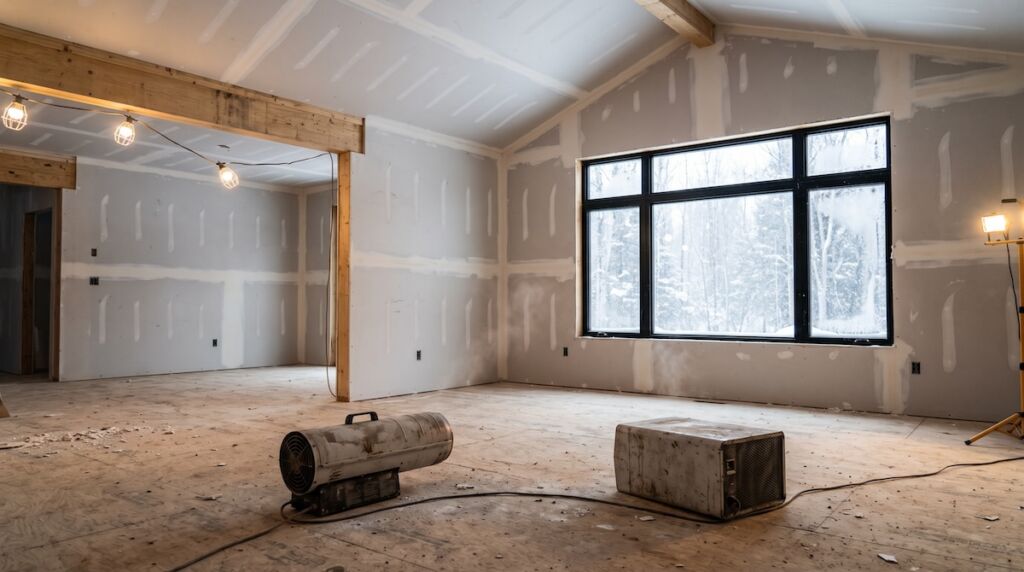
“Dried in” means the roof is sheathed and covered with underlayment, and the wrapped exterior walls have their windows and doors installed. At that point the house can shed snow and rain, and interior trades can work without fighting the weather.
This is the most important winter milestone. Snow that piles up on an open subfloor has to be shoveled off before work can continue, and lumber that sits wet for weeks can grow mold or move as it dries.
Temporary Heat for Drywall and Paint
Inside a dried-in house, the next challenge is temperature. Drywall compound and paint need the space held within a specific temperature range to cure properly, and each product lists its own requirements. Hardwood flooring and trim also need to acclimate at stable indoor conditions before installation.
Builders handle this with temporary heat, often by running the permanent furnace early or by using vented construction heaters. Humidity control matters as much as warmth. Unvented propane heaters put a lot of moisture into the air, which can cause drywall problems and condensation on new windows. Good ventilation keeps the finish work on track.
Spring Frost Laws and Deliveries
As the ground thaws in late winter, roadbeds soften. That is when the state imposes seasonal weight limits on heavy trucks. The Michigan Department of Transportation explains its spring weight restrictions as a way to protect saturated roads from damage until they stabilize. Local road agencies can set their own restrictions on their roads.
Those limits can affect concrete trucks and lumber deliveries heading to rural lots on county roads. The start and end dates change every year based on frost conditions, so nobody can circle them on a calendar in advance. A builder who knows the local roads will try to get heavy deliveries done before the restrictions begin, or plan around routes that carry no reduction.
Why a Fall Start Can Work in Your Favor
A fall start sounds risky, but it often lines up well with Michigan weather. If excavation and footings happen in September or October, the foundation can be poured before the ground freezes deep. Framing follows in late fall, and a well-run project can be dried in before the heaviest snow arrives.
From there, the winter months go to interior work that the weather barely touches. Mechanical rough-ins come first, followed by insulation and drywall. Cabinetry and trim go in once the walls are finished. By the time spring arrives, the house is moving into final finishes, and exterior work like grading and driveways can start as soon as the ground allows. For a broader view of how each stage fits together, our Michigan custom home build process guide lays out the full sequence.
How We Report Weather Delays
Winter will cost some days. A storm can shut down a framing crew, and a deep cold snap can push a pour. What matters is that you hear about it right away.
Every client receives a weekly update from us, with a shared photo folder and a current schedule. When weather causes a delay, we report it plainly in that update, along with what we are doing to recover the time.
Frequently Asked Questions
Is building a house in winter in Michigan more expensive?
Cold-weather work adds costs for things like curing blankets, heated enclosures, temporary heat, and snow removal. A project that is dried in before the cold has far fewer of these costs than one pouring foundations in January.
How deep do footings need to be in Michigan?
The Michigan Residential Code design table lists a frost line depth of 42 inches, and most of our service area builds to that figure. Local building departments set the final requirement, so confirm the depth with the township or county that will inspect your project.
Can concrete be poured when it is below freezing?
Yes, with the right precautions. The subgrade has to be clear of frost and ice before anything is placed. Suppliers often heat the mix and may add a non-chloride accelerator, and crews protect the fresh concrete with blankets or heated enclosures until it gains enough strength.
Will frost laws delay my project?
They can affect heavy deliveries during the spring thaw, especially on county roads near rural lots. A builder who tracks the restrictions can usually schedule concrete and lumber deliveries around them.
When is the best time to start a custom home in Michigan?
Many projects do well with a late summer or early fall start. For anyone considering building a house in winter in Michigan, that timing lets the foundation and framing happen in decent weather, and it puts interior work in the winter months when crews can stay productive indoors.
Plan Your Winter Build With a Licensed Michigan Builder
A winter build succeeds or fails on planning that happens months earlier. We hold dual Michigan Residential Builder’s Licenses and bring 50 years of combined experience to scheduling around frozen ground and spring road limits. Our luxury custom homes are built on the same weather-aware schedules, with the same weekly updates in January as in July.
If you are weighing a fall or winter start, contact Renaissance Building for a no-obligation consultation. We will walk your lot with you and give you a realistic picture of what building a house in winter in Michigan would mean for your timeline.